With the sounds of battle coming from the enemy’s gates the sergeant told Philippe, “Write down every miracle.”
Philippe told him that he couldn’t think of a single one.
The sergeant responded, “Then open your eyes.”
Philippe told him that his eyes were open, but there were no miracles to be seen.
The sergeant knew Philippe wasn’t ready to be launched like a rock against the gates of hell, but with the battle raging the sergeant had time only for a brief deliverance or mini exorcism – words of command given to the demonic mountain to move – before he turned to the next soldier.
But that was all Philippe needed for the grays to wash clean with brand new bright light.
______
Denise offers the prompt word “brand” to be used in this week’s Six Sentence Stories.
Once upon a time, much like today, there lived a lad who was happy.
He was happy the next year and the next and he was even happy the year after that. One almost wondered if he would ever have a sad year, but even when it seemed like he should be having a sad year, he was happy.
People asked him why he was so happy wondering if they could be happy as well, but worried that there might be a catch or some odd requirement that would disqualify them.
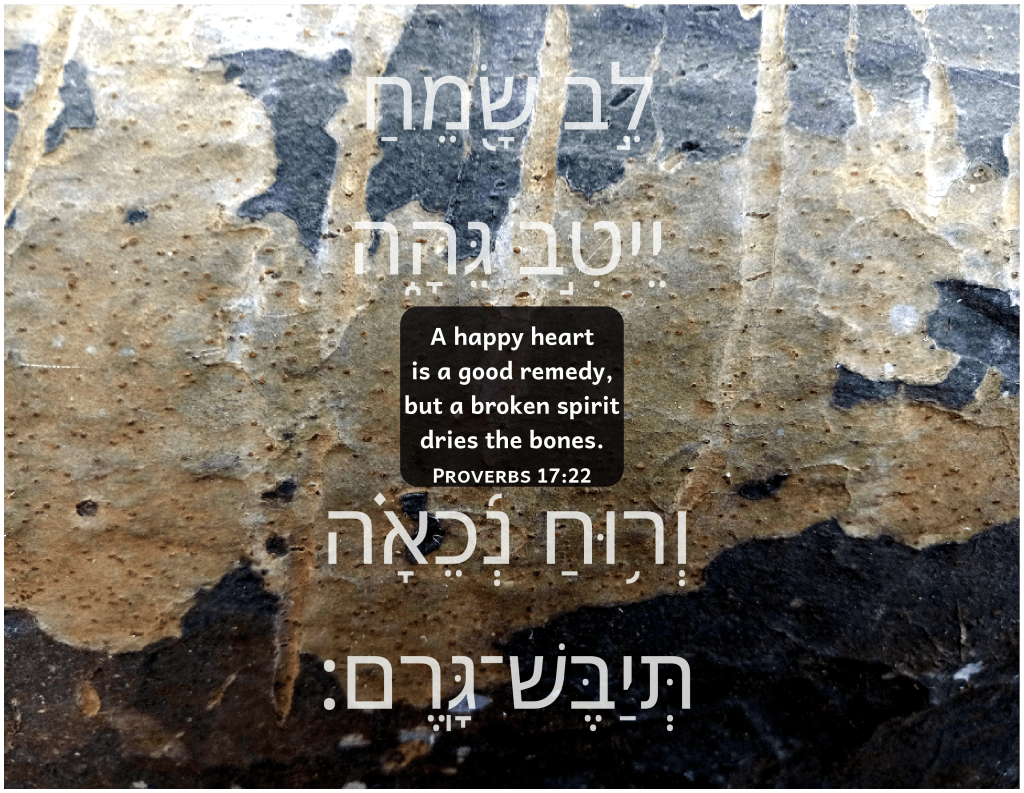
He told them that a happy heart is a wonderful remedy but a broken spirit dries the bones which puzzled many figuring he really didn’t tell them anything useful, but some, even some of the puzzled ones, decided to just live happily ever after since what harm could it do? By doing so they might even witlessly check off all the requirements, if there were any, and live happily ever after.
______
Denise offers the prompt word “check” to be used in this week’s Six Sentence Stories.
Once upon a time there lived a critter, a fish out of water, whom no one could figure out. We all knew he had problems, but he didn’t think there was anything wrong with himself, at least, nothing worth the bother of fixing.
Although he reassured us that he was fine – “just following a different drummer”, he lamely explained – how could we convince him otherwise without a proper diagnosis? So, we diagnosed him ourselves yelling: YOU’RE NUTS!
That should have solved the problem, but all it did was isolate the critter further while we went off to our regular therapy sessions and he let his problems go from bad to worse. Even after all of us went to our just deserts none of us could figure out why he kept living happily ever after.
______
Denise offers the prompt word “fish” to be used in this week’s Six Sentence Stories.
About five years ago I realized I was a biblical creationist. Much before that I would have said that birds came from dinosaurs and the world was gazillions of years old.
This has been one of the most interesting rabbit holes I have EVER gone down. I know you may be glad you didn’t go down yourself, but if you ever decide to take the plunge, below are three YouTube channels that I now regularly watch and highly recommend.
Standing For Truth
This episode covers Jason Lisle’s Anisotropic Synchrony Convention (ASC) and the model which predicted before the James Webb Space Telescope (JWST) reported back data that we would see fully formed galaxies at further red shifts that had heavy elements in them.
When JWST confirmed the predictions of Lisle’s model it falsified the big bang as we know it. A corrected big bang story will need to be devised by those who won’t give up on the Lambda Cold Dark Matter model, but Lisle’s ASC model needs no modification.
Examining Origins
My first introduction to Cornelius Hunter came from this channel. He is a philosopher of science who views biological evolution as a “theological research project”, not a science, although it could become a science if it started to take itself seriously.
Since listening to him a few months ago I have read his books, Darwin’s God and Science’s Blind Spot, both of which I recommend if you are interested in biology and the philosophy and history of science.
Logos Research Associates
In this episode John Whitmore provides an overview of the Coconino Sandstone. The beds of this layer are slanted rather than flat. A flat layer can easily be seen as having been laid down by a huge water catastrophe (think, the global flood of Genesis 6-9). However, can the tilted layers of the Coconino Sandstone also be viewed as deposited by water?
Concluding Remarks
The discussions on these channels are lively. Although the hosts are creationists, many evolutionists comment to challenge them. So, it is not a totally one-sided experience.
For a quick jump down the rabbit hole, these three channels are good places to start. You might even find, as I have, that you prefer it down there.
Once upon a time there was a lad who proudly declared that he took only one biology class (of which all he remembered was dissecting some frog), no chemistry classes and no physics classes (worth mentioning). He did take enough mathematics and programming classes to confidently declare that he could read all of that other garbage should he ever want to waste his time doing so.
About the same time there was a lass who had her eyes on the lad. It is unclear whether she pursued him or whether she convinced him to pursue her or whether there was any difference between those two options. Regardless, she got him.
Since biology works no matter how many classes you’ve taken nor how many frogs you’ve dissected nor how many boyfriends you’ve convinced to pursue you, they made a vow to live happily ever after.
______
Denise offers the prompt word “vow” to be used in this week’s Six Sentence Stories.
Once upon a time there was a lad who read bestsellers like The Fool’s Guide to the Multiverse, The Evolution of Unbelievably Common Ancestors and How To Buy and Sell Dark Matter.
Our lad had many friends. He taught them everything he learned from his extensive reading. They said, “Wow!” In turn they taught all of it to everyone they knew.
The lad and his friends lived happily ever after until they dumped a tad too much dark matter on the commodity exchange generating an enhanced gravitational force that collapsed the exchange into an unstable stellar object which exploded leaving a nasty black hole all of which is detailed in the lad’s new bestseller How NOT To Dump Dark Matter on a Commodity Exchange.
______
Denise offers the prompt word “force” to be used in this week’s Six Sentence Stories.
Once upon a time I listened to the yadda, yadda, yadda of a spell echo round the cylindrical walls of a black cauldron filled with a smelly, syrupy soup concocted to fix whatever it was the witch doctor stirring the pot said was wrong with me. Doc ladled some of the syrup into a cup and gave it to me forcing me to wrap my fingers around the cup’s ornate handle featuring a smiling serpent with a wicked forked tongue sticking out.
Now, what would you have done? Would you politely drink whatever was in the cup or would you dump it all out?
I often just drink it, but this time I poured it out when doc wasn’t looking. An ugly monster rose from the dirt floor and grew to immense proportions before its head exploded – and I was glad it didn’t do that in my stomach – leaving me happily ever after to tell the tale.
______
Denise offers the prompt word “echo” to be used in this week’s Six Sentence Stories.
Book: J.C. Walter, Compact Time: Radiocarbon Dating & the Case for a Young Earth, New Creation, 2025.
The main difference between compact time (CpT) which the author promotes and deep time (DpT) is that geological time is based on a calculated adjustment of ages provided by the decay of Carbon-14 (14C) rather than the decay of uranium or other such radioactive isotopes.
14C decay by itself provides a reliable measure of time for the past 3000 or so years and it is used in archeological research. However, for objects much older than that age it runs into problems with known historical dates. CpT is a calculated adjustment for 14C to agree with better known archeological dates.
Also since 14C is present throughout the fossil record this suggests strongly that the fossil record itself is not very old. This falsifies DpT. Soft tissue in dinosaur fossils confirms the shorter age as well. If one applies CpT to the fossil record one gets a geological time measurement that agrees with archeology and suggests a possible age for the fossil record.
A short age implies that the hypothesized catastrophes of the past forming the geological mega-sequences should be lumped together into one “giga-catastrophe” which can be associated with the biblical flood of Genesis 6-9 along with stories of the flood in many other cultures. The author puts the giga-catastrophe about 5350 years ago which is close to the estimate used by the Associates for Biblical Research for the biblical flood. The years since the giga-catastrophe is a parameter in the model for CpT given in Chapter 5.
The author provides a clear presentation that is well documented for those who would like to try using CpT or research it further.
______
Interview of chemist John C. Walton by Henry B. Smith Jr of the Associates for Biblical Research
Daniel wrote, Seventy weeks are determined upon thy people and upon thy holy city, to finish the transgression, and to make an end of sins, and to make reconciliation for iniquity, and to bring in everlasting righteousness, and to seal up the vision and prophecy, and to anoint the most Holy.1
Although at first he didn’t understand, he knew he was promised understanding and that this was an answer to his supplication. But how did the virgin with child that Isaiah prophesied fit into all of this and why that name Immanuel?
The channel of events in the vision ended ominously with: and for the overspreading of abominations he shall make it desolate, even until the consummation, and that determined shall be poured upon the desolate.2
Understanding comes through obedience and as Daniel wrote in obedience his understanding matured until he realized the virgin’s role between the going forth of the commandment to rebuild the walls and this desolation along with the central importance of the sixty-third of those seventy weeks when the covenant would be confirmed.
As gratitude overwhelmed him with peace Daniel could see that the ink was dry enough for him to roll up the scroll.
______
Denise offers the prompt word “channel” to be used in this week’s Six Sentence Stories.
After Nimrodwannabe’s kingdom fell to the Medes and Persians, Daniel won the favor of Darius, the new king, to the envy of others. Some of those others deceived Darius into passing a law, secretly targeting Daniel to get rid of him, that Darius could not undo punishable by death to whomever broke it.
When Daniel did not obey he was arrested and sentenced to spend a night in the den of lions who were kept hungry by not feeding them provision from the lion keeper’s shed. All Darius could do at this point to save his favorite was wait and see if Daniel’s God could and would protect him from the treasonous setup.
When Daniel survived Darius had the deceivers – along with their wives and children – cast into the same den for the lions to execute judgment. The lions eagerly did.
Daniel 6:24 KJV – And the king commanded, and they brought those men which had accused Daniel, and they cast them into the den of lions, them, their children, and their wives; and the lions had the mastery of them, and brake all their bones in pieces or ever they came at the bottom of the den.


 Poetry, Short Prose and Walking