How To Get There From Here—Six Sentence Story

Sam knew he couldn’t get there from here, at least not on his own smarts, but he agreed to go.

The still small voice told him to move to Colorado, then Florida and then Maine. Although those moves made no sense, he moved anyway, since he knew he didn’t have the smarts to know what to do next. At every turn he took the time to listen and then do what the voice told him to do.

One day Sam was overwhelmed with joy to realize that he and the still small voice had been living, seemingly for years, in a wonderful dwelling paneled with righteousness and furnished with goodness and mercy.

The still small voice said, “I told you we’d get here when you agreed to go with Me.”

______

Denise offers the prompt word “panel” to be used in this week’s Six Sentence Stories.

Do That To Me—Six Sentence Story

Tim didn’t know the minister, Daniel, nor most of the other people at the small church gathering in his neighbor’s home. He was surprised when a young woman collapsed to her knees in tears and then lay on the floor as Daniel spoke words of blessing over her.

When Daniel asked Tim to tell them how he first met Jesus, he wasn’t sure how that happened, but knowing it must have, he stood, held Daniel’s hands and began telling his story, a type of incoherent, shaky narrative that went from repentance to repentance to finally moving next door to them. While speaking he thought to himself that he so wished his testimony were better.

The next thing Tim knew he was looking up at Daniel apparently from having fallen over backwards to the floor caught on the way down by a man standing behind him, just in case.

An older woman who had attended many of these meetings rushed to Daniel saying Do that to me! even though, or maybe, because, both she and Daniel knew he wasn’t the One who made Tim fall like that.

______

Denise offers the prompt word “type” to be used in this week’s Six Sentence Stories.

I found this song on Greg Doles’ blog, Chasing Light

Clawing Critters—Six Sentence Story

Steve realized that by giving in to temptations, symptoms of his ailing heart, he invited demonic critters to claw their way in and smother his mind with gooey addictions. Nonetheless, he kept giving in—over and over again—and the critters got so used to being in his head that they took up residence.

Someone asked Steve if he wanted to get rid of the critters. By that time he wasn’t sure if he did, because he didn’t know if he could tolerate life without the excitement the temptations brought even though afterwards they made him feel miserable. Steve’s heart, however, had enough sense left in it to scream, I WANT THEM GONE!

And just like that the critters were gone which Steve found hard to believe, but there wasn’t any other way for them to leave except just like that.

______

Denise offers the prompt word “claw” to be used in this week’s Six Sentence Stories.

Mark 5:18-20 NKJV
18 And when He got into the boat, he who had been demon-possessed begged Him that he might be with Him.
19 However, Jesus did not permit him, but said to him, “Go home to your friends, and tell them what great things the Lord has done for you, and how He has had compassion on you.”
20 And he departed and began to proclaim in Decapolis all that Jesus had done for him; and all marveled.

The Calling—Six Sentence Story

As James was wallowing in his favorite garbage someone called his name. When he saw that no one was there he went back to making a wreck of his life.

Then James heard the same voice that called him earlier tell him to become a minister of the Gospel. Fat chance that was going to happen, he thought, but the voice interrupted him with You’re goofing off on holy ground! The voice had that je ne sais quoi that made it too real to be unreal even for a garbage connoisseur like James.

His friends were shocked as they watched James take out the garbage and turn that fat chance into a sure bet that he would do something with his life that he had never suspected.

______

Denise offers the prompt word “wreck” to be used in this week’s Six Sentence Stories.

Acts 9:5 NKJV Who are You, Lord?

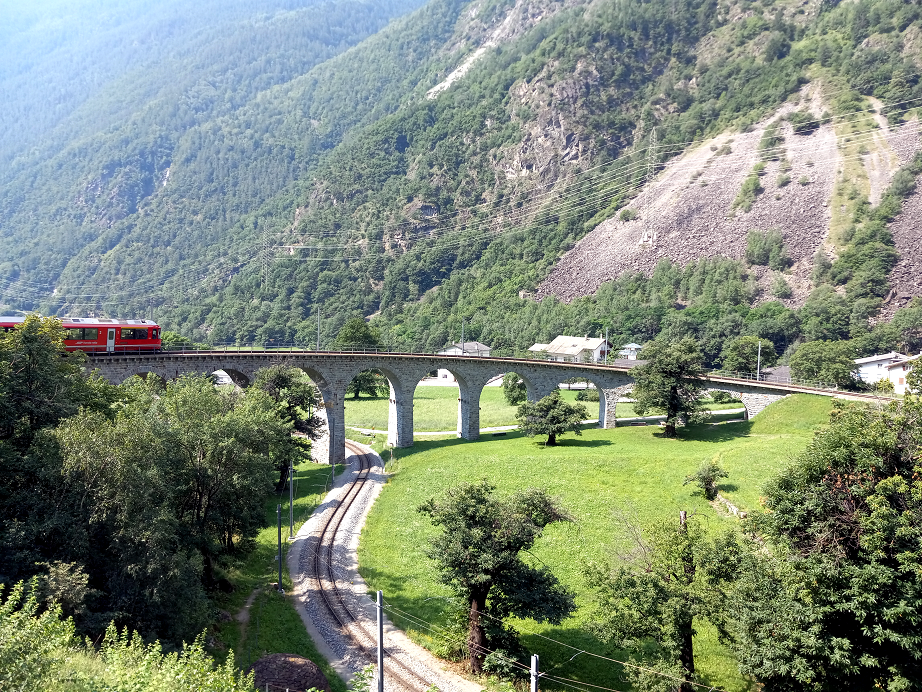
This train had to make a complete circle to get itself pointed in the right direction—I was on it

Foil—Six Sentence Story

When Claude was twelve years old he got tuberculosis. He began singing a new song as his family prayed for his recovery.

He sang that no grave could hold his body down. He sang about bands of angels coming for him to take him to Jesus.

The Lord loves to foil the dastardly deeds of the devil.

So did Claude as he received his healing.

______

Denise offers the prompt word “foil” to be used in this week’s Six Sentence Stories.

Psalms 96:1 KJV
O sing unto the LORD a new song: sing unto the LORD, all the earth.

A modern version of Claude’s song
Claude Ely singing his song

Light Speed and Biblical Chronology

John Hartnett reviewed Jason Lisle’s Anisotropic Synchrony Convention (ASC) model in 2011. Hartnett’s own solution of the light travel time problem (LTTP) used time dilation and the Einstein Synchrony Convention (ESC) which can be explored in more detail in Starlight Time and the New Physics.

Hartnett’s review helped me better understand what was going on with these creationist solutions to the LTTP. The rest of this post goes into the details of some explorations I’ve made.

What is the LTTP?

In the 1670s Ole Roemer first found that the speed of light was finite. In the 1830s Thomas Henderson first measured the distance to a star, Alpha Centauri, at about one parsec, over three light years away. Those two measurements, in the context of the absolute space and time of Newtonian physics, are all that was needed to challenge the truth of Genesis.

Since we can see the light from Alpha Centauri the universe should be as old as the time it takes for light to travel from that star to us. With the speed of light being finite and this star being very distant, Adam could not have seen it on the 6th day.

The LTTP is the conflict between the biblical age of the universe and the amount of time light needs to reach the earth from distant stars. In the 19th century deep time became a misleading scientific fact. This encouraged two unfortunate responses to the Bible: 1) reject it entirely or 2) turn its historical content into allegory.

Relativity Theory

Relativity theory gave creationists two ways to resolve the LTTP. They could either use a synchrony convention as Lisle had done or they could use a time dilation approach as Hartnett (and others) had done.

Einstein’s resolution of the conflict between Maxwell’s electromagnetic theory and Newton’s gravitational theory put the finite speed of light as a limiting speed and all observers regardless of their relative velocities would measure the speed of light as the same value. Since velocity is distance (space) divided by time, the trade-off for making a specific velocity absolute meant that space and time no longer were. Different observers might measure times or distances differently. In particular, what clocks read are dependent on the reference frame the clock is in.

This allowed time dilation solutions to the LTTP.

When one measures the speed of light one is measuring a two-way speed. This avoids having two clocks which cannot be trusted to remain synchronized in relativity theory when one clock is moved away from the other.

This allows one a choice of synchrony convention where the speed of light in one direction could be different from the return speed. The only requirement is that the round-trip speed be constant.

For example, if an object 13 billion light years away became visible on earth the age of the universe could be, by picking the appropriate synchrony convention, anywhere from 0 years old to 13 * 2 = 26 billion years old since the round-trip distance going to that object and back again is 26 billion light years. It no longer had to be 13 billion years.

By the way, we know the universe is more than 0 years old because secular historical records go back around 5000 years, but we do not know that from relativity theory itself.

This allowed synchrony convention solutions to the LTTP.

An objection to the ASC model

Those using the ASC model choose a synchrony convention where the light leaving the observer is half the two-way speed of light. This allows the return trip of the light to be nearly instantaneous.

An objection one might make against Lisle’s ASC model is that it is based solely on a choice of synchrony convention. Someone else could make a different choice and construct a different model conflicting with Genesis. That’s true, but that there is now a choice solves the LTTP.

This left creationists with the challenge to provide evidence that the entire universe is actually young, not just that it could be viewed as young from a specific synchrony convention. However, much of that work had already been done.

Mature creation and natural processes

Genesis 1:1 tells us that the earth is special: God spoke it into existence on the 1st day. Genesis 1:16 tells us where stars came from: God spoke them into existence on the 4th day. All of these creations were mature creations. They were not the result of lengthy natural processes because they all happened within a single day. Indeed, for much of God’s creative work, such as, matter itself, stars, planets, and the first plants, first fish, first birds, first beasts and first human beings there are no natural processes available that could bring them into existence no matter how much time is available.

Those who only put their trust in natural processes want nothing to do with creation, mature or otherwise. By relying on natural processes they hope to discover laws that explain the existence of the universe without God’s creative work. One of the beliefs they’ve come up with is the hope that universes can randomly pop themselves into existence. Another belief is that there are infinitely many of these popped universes one of which would be the one we are living in.

No one ever popped a universe into existence. They have to assume it is possible for something like that to happen. If that were not possible, then they would have to give God credit for his mature creative work, something they do not wish to do.

Although they are aware that the above is an assumption (or, rather, a theory), they’ve made another assumption that they are likely unaware of. They believe that the orderliness of natural laws governing the natural processes they observe are somehow independent of God. However, if natural law is “the normal way God upholds the universe today”, as Hartnett notes on page 60, then there would be no natural processes whatsoever without God.

What could falsify the ASC model?

Most creationists reject using the idea of mature creation as an explanation if it would imply deceptiveness on God’s part. For example, they reject the instantaneous creation of light in transit as a solution to the LTTP. Such light would not have originated from the star although it would have appeared to have. That would have been deception.

Hartnett challenged Lisle to come up with ways to falsify his model. At what point would one have to give up on the ASC model and go to Hartnett’s time dilation approach?

Given the rejection of deceptive mature creation all one would need to reject the ASC model is to find an ongoing process that would take longer than the biblical age of the universe to reach the state it is in. Light travelling over long distances was such a process that the ASC model eliminated. Are there any others?

An example of such a process might come from the expanding remnant clouds of unobserved supernovas. If their rates of expansion from their neutron stars implied that they had been expanding longer than the biblical age of the universe, then this would be a deceptive mature creation that would falsify Lisle’s model. Lisle did not believe that any such example had so far been found.

What is the biblical age of the universe?

Chris Hardy and Robert Carter calculated a minimum and maximum age of the earth that could be identified as biblical because some collection of biblical manuscripts supported it. Although the discrepancies in these manuscripts are small, the numbers found in different manuscript versions of the genealogies of Genesis 5 and 11, for example, can lead one to compute rather different ages.

Accounting for all presently known relevant details and assuming the Babylonian Captivity began in 587 or 586 BC, we can say with confidence that the Bible places limits on the year of creation between 5665 and 3822 BC. The uncertainty within this range is mainly driven by textual considerations. The Masoretic/LXX debate creates a 1,326-year dichotomy, the Long vs. Short Sojourn positions differ by 215 years, and various interpretations of the lists of the kings of Judah and Israel equates to around 54 years of additional uncertainty.
– Chris Hardy, Robert Carter, The biblical minimum and maximum age of the earth, Journal of Creation 28(2):89–96, August 2014

Taking the Masoretic/LXX debate, the Long vs Short Sojourn and the list of kings of Judah and Israel into account results in an overall difference of 1843 years. Within that range one can identify two major, conflicting creationist positions. The older position puts the date of creation at about 5500 BC (with the age of the earth about 7500 years) while the younger position puts it about 4000 BC (with the age of the earth about 6000 years).

Since both Lisle and Hartnett refer to a 6000 year age of the earth rather than, say, a less than 8000 year age, I assume they are committed to the younger creationist position.

Both of these creationist positions depend on the global catastrophe of Genesis 6-9 to explain why the earth looks the way it does today with mountains, glaciers and planation regions. Hence, it is worth identifying when that occurred.

Hardy and Carter give maximum and minimum years for the flood as 3386 BC and 2256 BC with a difference of over a thousand years. The older creationist position puts the date of the flood around 3300 BC (about 5300 years ago) while the younger dates it around 2350 BC (about 4400 years ago).

In terms of falsifying Lisle’s theory, if he insists on the younger creationist position, processes that began after creation can take no longer than about 6000 years. If a process is found that takes less than 7500 years but more than 6000 years he could maintain his ASC model but reject the younger creationist position for the older one. Only if the process required more than 7500 years (specifically, 7688 = 5665 + 2024 – 1 years using Hardy and Carter’s data and today’s year 2024) would Hartnett’s time dilation model be needed.

Unreliable clocks

There are people who will say things are old using a radioactive decay clock. Their dates have to survive the challenge that radioactive decay rates may have changed in the past leading to the clock they are using being unreliable. One way to verify that their clocks are reliable would be to require that the dates they offer are confirmed by another clock whether those clocks are based on radioactive decay, erosion or biological decay. If the other clocks don’t agree, then the date has been falsified.

Here are three examples of unreliable clocks.

  • Radioactive falsification
    If one claims that a landform is over 123,000,000 years old, but a beryllium-10 decay clock shows it is only 1,900 years old, then that date has been falsified by a radioactive clock.
  • Erosion falsification
    If one claims that a fossil is 500,000,000 years old, but the entire landform where the fossil was found would have been eroded into the sea in less than 50,000,000 years, then that date has been falsified by erosion rates used as a clock.
  • Biological falsification
    If one claims that a fossil is 65,000,000 years old, but it still contains soft tissue, then that date has been falsified by biological rates of decay used as a clock.

Reverse challenges to deep time

Don Batten’s 101 evidences for a young age of the earth are 101 challenges for those believing in deep time, challenges which have not been met. Batten writes:

When the evolutionists throw up some new challenge to the Bible’s timeline, don’t fret over it. Sooner or later that supposed evidence will be turned on its head and will even be added to this list of evidences for a young age of the earth.

The correct response in the 19th century prior to relativity theory would have been to accept the self-attesting authority of the Bible rather than bend a knee to the views of man. Does that sound like too strong of a commitment to the Bible? The Bible is, after all, the word of God. Only a fool would not have a strong commitment to it.

By contrast, it’s a wonder that anyone (in his right mind) would be so committed to big bang fairy tales that he would prefer to sprinkle his eyes with dark matter—dark pixie dust that no one can find—rather than face the truth that his atheology has been falsified long ago.

______
Wind—Six Sentence Story

Stephen worked on his speech the whole week to make sure every word and every pause, noted with a comma, was just right.

When the day came for him to speak he didn’t want to forget anything. He printed his speech in big letters on many sheets of paper so he could see the words clearly.

As he looked out upon the crowd who were wondering what he would have to say gusts of wind carried away those sheets of paper leaving him with, seemingly, nothing to rely on as he spoke.

Although what Stephen said was in line with what he had prepared the words that came out of his own mouth surprised him. The crowd prepared its punch with murderous anger but when it was all over Stephen was carried away, victorious, by the King of glory.

______

Denise offers the prompt word “punch” for this week’s Six Sentence Stories.

Acts 7:54-56 KJV
54 When they heard these things, they were cut to the heart, and they gnashed on him with their teeth.
55 But he, being full of the Holy Ghost, looked up stedfastly into heaven, and saw the glory of God, and Jesus standing on the right hand of God,
56 And said, Behold, I see the heavens opened, and the Son of man standing on the right hand of God.

The Ocean Sunrise and Speculation

Question

What do people who believe the earth is flat or people who believe natural processes can form stars or people who believe that computers are intelligent have in common?

Answer

None of them have benefitted much from looking at a sunrise over a large body of water.

______

Flat Earth

Look at the sun on the horizon.

Notice how half of the sun is already visible on the horizon

The sun reveals its full diameter when it is only half-way above the horizon. Either the sun is looping the earth or the earth is turning. One thing is sure: the sun is not floating above a flat earth so far away that it vanishes into a dot in the distant sky at night only to grow bigger as it becomes visible in the morning.

But doesn’t Isaiah 40:22 talk about the Lord sitting above the “circle” of the earth?

We live in a three dimensional world, not a two dimensional one. If the earth were flat like a coin, it would only appear as a circle if we were looking directly at it from above. As we moved to the side, the coin would take on an oval shape. When we reached the edge, the coin would look like a line with only its edge visible.

However, looking at a sphere, from any direction, we would always see it as a circle just as we see the moon and the sun in the sky as circles. By describing the earth as a “circle”, which is how it would look from any perspective, Isaiah was describing the earth as a sphere.

I know there are people who try to deceive us with fake photographs. That’s why I did NOT ask you to look at the photo, but at the sun itself as it rises above the horizon.

As the sun rises for us there are people in other time zones. You may even know some of them. Give them a call. Ask them to describe where they see the sun in the sky as you are watching it rise. Where would those people have to be if the earth were flat?

For those who think the Bible erroneously teaches that the earth is flat, see James Patrick Holding’s response to Paul H. Seely. You will need to answer Holdings objections if you agree with Seely. This recommendation to watch a sunrise would only benefit those who themselves believe that the earth is flat based on the teachings of people like Dean Odle.

Astrophysics

Look at the surface of the water.

Notice that we see a surface on the water because of hydrostatic equilibrium

Gravity pulls water to the earth, but gravity is not so strong that water keeps falling toward the center of the earth. At some point it stops. We get a surface for the water when outward pressure balances inward gravity to keep the water in a state of hydrostatic equilibrium. What is happening is similar to what happens in a stable star where gravity and pressure are also in balance.

But what if all we have are gas clouds without any stars? Can we get stars from gas clouds? Can gravity pull the gas clouds together so tightly that nuclear fusion lights up a cluster of stars?

Gravity by itself cannot overcome the hydrostatic equilibrium between itself and the pressure pushing out on the cloud. If it could, it would be like gravity suddenly taking the surface of the water in front of us and collapsing it toward the center of the earth.

But what about dark matter which would increase the force of gravity?

Physicists describe the patterns of repeatable processes. They are not writers of fairy tales sprinkled with pixie dust to make their stories plausible. If we believed that our theory required dark matter, we would have to produce that dark pixie dust or admit that the theory had been falsified and needed to be replaced with a new one.

At least, that is how science is supposed to advance. Make an hypothesis. If it fails, make a new hypothesis. Don’t add in unfalsifiable pixie dust just to keep a dead hypothesis afloat.

As an aside, Genesis 1 provides a better explanation for why there are stars in the sky than any amount of physical theorizing could since physical theory can’t deal with life, mind or the spirit without reducing them to mindless matter.

But I’m a neutral scientist! I don’t believe in the Bible!

If you say things like that, then you only show that you are self-deluded in your belief that you’re a neutral scientist.

While at the beach notice with gratitude how gravity and pressure are balanced to give the water a surface that gravity by itself cannot overcome.

After reading Michael Richmond’s description of how the “careful balance between gas pressure pushing outward, and gravitational force pulling inward” in a stable star can be broken, I am amazed that there are any stars out there that haven’t already blown up.

Simulation Theory

Look at this photo of the sunrise.

Even those birds are more aware of the sunrise than my phone is which recorded the picture

It is a digital file showing an image of the sunrise with some seagulls. It is neither the sunrise nor is it those birds. It is only data.

The computer presenting the image for me is neither conscious nor intelligent. It only responds to data or environmental changes according to its programming. Here, it is programmed to show me the image.

But computers can behave so much like people that they can fool you!

Since you know that computers can be used to deceive, be cautious when people send you information through them. Just because someone tells you that a computer is a mind or that it is intelligent in some artificial way does not make it so.

Almost 45 years ago John Searle published the Chinese room argument undermining artificial intelligence. Back then few people (maybe no one for all I can remember) had a laptop or a mobile phone. We might have been fooled by simulation theories or movies like 2001: A Space Odyssey—back then, but today such devices are so common that no one should see them as more than mindless machines.

The source of any problems with computers rests with people who deceptively use them to manipulate others. By contrast, when someone provides arguments exposing those deceptions, those very same computers become valuable tools providing us with access to the information that deceivers don’t want us to see.

To get a few of the references for this post I used search engines. It took time to come up with something interesting, but I was asking questions like why haven’t all the stars blown up by now. Even with my poor questions and even with search engines possibly programmed to lead me astray, I found most of what I wanted in minutes. That computers could help me with this search doesn’t mean they are intelligent or smart. It only means that they and the databases supporting them are effective, like hammers, to help me get a job that I wanted to do (not something they wanted to do) done.

______

If you believe the earth is flat or if you believe that gas clouds can be compressed by gravity to the point where they start shining on their own or if you believe that computers are minds, then spend a weekend at the beach. Take a few pictures of the sun rising above the horizon with birds flying over the surface of the water.

Bring a Bible along, perhaps as an app on your phone, to help you understand what you are looking at.

Proverbs 26:4-5 KJV
4 Answer not a fool according to his folly, lest thou also be like unto him.
5 Answer a fool according to his folly, lest he be wise in his own conceit.

Philosophical Foam—Six Sentence Story

George decided to write his Philosophy of Everything so future generations could be as confused as he was.

He wrote and wrote and wrote explaining how spacetimes instantiated invisible worlds wherever a wavefunction collapsed. Not liking the idea of other people’s minds getting in the way with objections, he reduced them to mindless matter. He called his branch of philosophical foam The New Mysterianism of the Matter Mind.

Eventually George published his book.

Not even the devil bothered to read it.

______

Denise offers the prompt word “foam” to be used in this week’s Six Sentence Stories.

Colossians 2:8 KJV
Beware lest any man spoil you through philosophy and vain deceit, after the tradition of men, after the rudiments of the world, and not after Christ.

Relic—Six Sentence Story

Looking at the relics of his past, those lingering memories of his old habits, George couldn’t see how he got from there to here no matter how many self-help programs he pursued. Oh, sure, he gave most of those programs five-stars, but he knew none of them helped and none of them did.

The problem was that it’s hard to love when one loves to whine. And George’s imagination gave him plenty of targets for his wrath.

Then George gave up, figuring it was most likely all his own fault. Laughing, the Lord said, “Finally!”

______

Denise offers the prompt word “relic” to be used in this week’s Six Sentence Story.

The idea for this story came from Mary “Tq Housecat” who called Romans 5:1-9 “the best six-sentence story ever written!”

Yellow Blossoms