Evolutionary Magic vs Mutation Rates

To pull a rabbit out of a hat you need a rabbit, a hat and a lie. The lie of abiogenesis provides the rabbit – if you believe the lie.

But where did the hat come from?

To get the hat dark matter magically guides stuff the big bang blew up down gravity rabbit holes to produce stars by overpowering the normal functioning of the natural law of hydrostatic equilibrium. Then stars blow up again only to coalesce again and again. After a gazillion years a hat appears in the magician’s hand.

There are easier ways to get a hat, but what does the magician really have up his sleeve? And why are we watching the show?

Rebekah Davis of Examining Origins interviews Matt Nailor of Standing For Truth

How To Look

I added the following time markers with my notes to the video above because it is rather long. These parts stood out for me in this battle between evolutionary magic and evolution-refuting mutation rates.

0:50 Mutation rates are FAST. They are based on observed pedigree data, but evolutionists need them to be SLOW so their calibrations fit the long phylogenetic chronology they have read into the fossil record.

14:45 Genetic diversity is measured by mutations in the mitochondrial DNA (mtDNA). However, not all regions of the mtDNA mutate at the same rate. The most accurate regions as far as a clock goes are the two hypervariable regions.

20:15 Thomas Parson’s pedigree study using the FBI blood bank filled with samples from diverse people groups focused on the two hypervariable regions of the mtDNA. They provide the most useful data for forensic science. From this data our earliest female ancestor, Mitochondrial Eve, was estimated to have lived about 6,500 years ago.

40:55 Other pedigree studies confirmed Parson’s results. Genealogical rates also aligned with the pedigree studies.

50:55 Slowing the mutation rate by 15% to add in selection that evolutionists need only pushes Biblical Eve from 6,500 years to a maximum of 7,657 years ago. It fits the Septuagint biblical chronology even better covering the date for Creation at 5554 BC which would be 7,578 years ago (where 7,578 equals 5554 BC plus 2025 AD minus 1 overcounted zero year).

52:30 The genetic diversity for whales, thoroughbred horses, cats and chickens all align with human mtDNA data. There is no time for anything to have evolved from a single common ancestor that evolutionists predicted had occurred.

1:09:00 Everything we see around us that can be historically dated only goes back about 5,000 years. That includes written records, pottery, astronomy, mathematics, metallurgy, brewing beer, irrigation, or the oldest leather shoes. Claims that there are sites which are much older, such as Göbekli Tepe, are easily discredited. This fits nicely in the Septuagint flood date of 3298 BC which was about 5,322 years ago (where 5,322 equals 3298 BC plus 2025 AD minus 1 overcounted zero year).

1:15:00 All of this lands right on the biblical timeline and even in the biblical places after the flood. The only thing that disrupts this are the conflicting, but old, radiometric measurements of the ages of rocks that evolutionists hang onto like a life raft. But rocks aren’t alive. As far as life is concerned, the creationist model is the only one that can handle the data.

1:16:40 Genetic diversity across species varies much less than expected or needed by evolutionists. These species emerged about the same time as humans from what evolutionists see and need as a global bottleneck since species also have genetic boundaries that are too distinct for evolutionist tastes. It was almost as if all species got in a boat two by two which saved them from a global catastrophic flood in order to replenish the earth once more. Evolutionists need some global bottleneck to account for the lack of genetic diversity, but they insist it was NOT the biblical flood.

1:46:00 Why not the flood? Now we are positioned to look up the magician’s sleeve. The theory of evolution started as a lie with an agenda. The goal was to free science from Moses by discrediting the historicity of the biblical record. That is why evolutionists will not consider the biblical flood as their needed bottleneck. If they did, that would credit the Bible with providing accurate information suggesting that creation itself might have occurred.

2:06:00 Bottom line: Evolution is “pseudo-science to the max”. Even as magic, evolution is not very convincing once one looks up the magician’s sleeve.
When a rabbit pops out of a hat
stay alert. Check those sleeves looking at
what might harbor a lie.
Keep on looking. Pass by
that sly grin gracing Alice’s cat.
Six Sentence Story: Daniel, The Prophecy

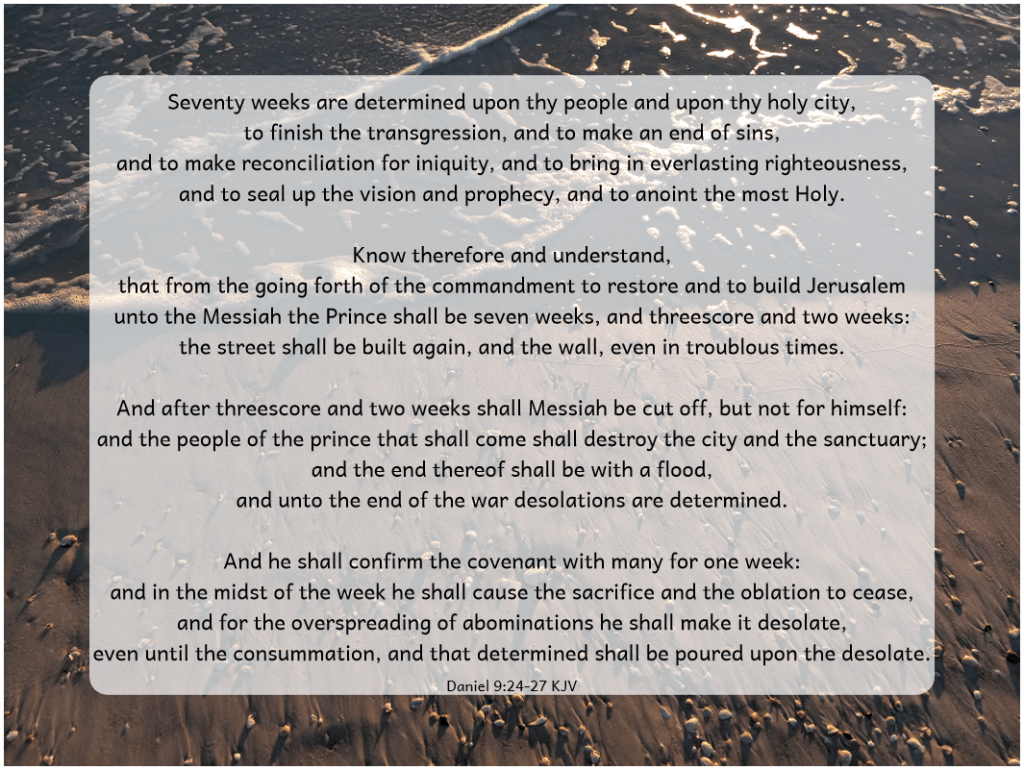
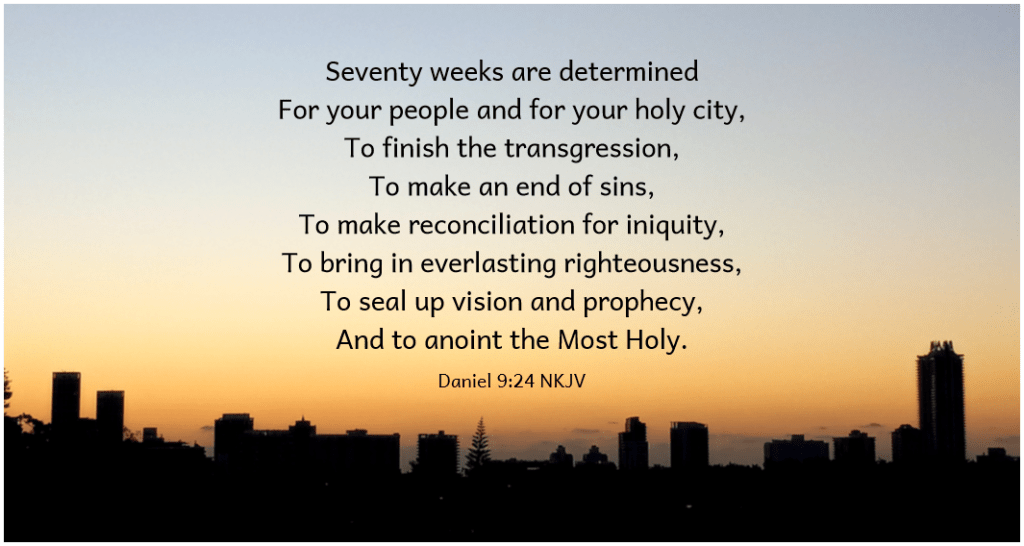
Whatever Daniel used for pen and paper in the 6th century BC, he knew he had to be ready to write down the words of prophecy. The one he received about the time of the evening oblation was the one he earnestly prayed for. It was the most important one anticipated for centuries and argued over for centuries more after it had finally been fulfilled.

As Daniel began his supplication, his prayer, Gabriel was sent. Before Daniel ended his prayer, Gabriel arrived bringing the skill and understanding Daniel would need to write down the vision.

Daniel took up his pen and wrote.

______

Denise offers the word “pen” for this week’s six sentence stories.

Six Sentence Story: When Daniel Thought About The Lord

Daniel would have preferred living his life in Jerusalem, but here he was in Babilopolis. He would have preferred serving a real king, but here he was serving Nimrodwannabe, a king of sorts, true, but so shockingly not what Nimrodwannabe could have been that compassion overpowered the natural disdain in Daniel for this king of sorts.

Every evening and every morning and throughout the day and even when he was asleep at night his mind – no, his heart – was elsewhere. People understandably thought he seemed distant or tagged him as odd, but wherever he was he was right where he was supposed to be telling Nimrodwannabe the meanings of those strange tales that troubled the king’s dreams.

For all that and much, much more Daniel was thankful. Gratitude kept him so busy he didn’t notice – or perhaps care – if it was darkening evening or shiny morning or wondrous daytime or that sleepy, dreamy nighttime so long as he was ready when the words were spoken to faithfully hear and write them down even when the prophecy was too mysterious for him to understand.

______

Denise offers the prompt word “tag” for this week’s Six Sentence Stories.

Six Sentence Story: Daniel, The Ring Of The Dream Whisperer

Although Nimrodwannabe’s love for the magicians was nonexistent, he did favor Daniel who arrived in Babilopolis after Nimrodwannabe subjected Jerusalem to his will. Unlike your run-of-the-mill magician Daniel was able to interpret Nimrodwannabe’s dreams so well that Nimrodwannabe placed him over all of the unloved magicians and gave him the Ring of the Dream Whisperer.

Daniel was also made a eunuch.

I know, I know that might sound shocking – and maybe I got the story wrong – but think how shocking it would have been to Daniel considering that the operation (however it was done) was nonetheless done in the 6th century BC! On the bright side, it would mean that Daniel didn’t have to worry about the teasing, the battings of eyelashes and all of the other forms of witchcraft coming from the less loyal cuties of the royal household allowing him to focus his attention on some of the more jealous magicians who liked Daniel even less than Nimrodwannabe liked them.

But in spite of everything and although Daniel himself longed for Jerusalem, he was quite happy in Babilopolis as the royal dream whisperer and ruler of the those pesky magicians.

______

Denise offers the prompt word “ring” for this week’s Six Sentence Stories.

Six Sentence Story: Fly Away

When Daniel got tired of writing King Nimrodwannabe’s dreams and his interpretations of them he’d let his visions fly to YouTube looking for a video that would give him enough refreshment to get back to work. Rapidly scrolling past an incredible amount of click bate garbage he found a video on how to make a paper airplane that would return to sender like a boomerang, but where was he going to get paper in Babilopolis in the 6th century BC?

He eyed the parchments upon which he was recording the dreams Nimrodwannabe lost in the land of forgetfulness wondering how well it might fold. He was sorely tempted.

However, if he didn’t continue writing, 21st century scholars with their interminable doubts that he or even Nimrodwannabe ever existed would have nothing material in their hands to doubt. He went back to work.

______

Denise offers the prompt word “fold” for this week’s Six Sentence Stories.

Six Sentence Story: What The Whole World Is Worth

In his campaigns that would give him the whole known world King Nimrodwannabe left once independent and prosperous communities burdened with annual tributes they now owed him. A few of these communities, the expendable ones which weren’t producing much in the first place, were tortured to terrorize their more productive neighboring villages into quick submission.

To maintain dominion over those villages which survived to surrender he brought their best and brightest back to his glorious Babilopolis where they would be educated so they could later serve as his overseers insuring his ongoing will was obeyed back home.

Though Nimrodwannabe was still young he was much too much in a hurry to waste valuable time getting cross with those who challenged him either at Babilopolis or abroad preferring speedy executions to lengthy quarrels. With the only real time he had any control over, since corpses are notoriously impotent, he took everything he could get his hands on even what was not given to him.

The demons reveling with him knew – once those tiny decades of Nimrodwannabe’s life were done – they would get it all not that it would do them much good either.

______

Denise offers the prompt word “cross” to be used in this week’s Six Sentence Stories.

Theological Naturalism and the Elephants in One’s Living Room

Most people don’t want elephants in their living rooms. If we have any and we don’t know they are there, it’s because we have a blind spot. It’s not that we don’t bump into those elephants multiple times. We do, but we can always come up rationalizations to explain why the walls keep moving about without having to admit that there are elephants in our living rooms.

While chasing out my own elephants, I ran into Cornelius Hunter whom Rebekah Davis has interviewed multiple times on her YouTube channel, Examining Origins. Hunter is a philosopher of science and a biologist. He is also a Christian, but for scientific reasons he is neither a creationist nor an evolutionist.

That means evolutionists don’t like him, because he allows for evolution to be false. They think he is compromising with creationism. That also means creationists don’t trust him, because he allows for evolution to be true. They think he is compromising with evolutionism even though he has shown that evolution has been scientifically falsified so many times that it is useless as a model of origins.

Theological Naturalism

Theological naturalism is neither atheism nor skepticism. Rather, it is a naturalism that arose out of Judeo-Christianity polluted over the millennia with Gnosticism and Greek philosophy. It is a naturalism justified by ideas of God as too omnipotent, too good, or too omniscient to be bothered with our messy (think, evil) world. Such involvement would damage His dignity.

Theological naturalism puts God on a pedestal. It is a theological position that removes God from His messy creation by handing His creation over to the idols of natural law and chance. It is a theological position that rejects Genesis 1-11 where we are told how evil entered the world.

As Hunter puts it in his book, Science’s Blind Spot: The Unseen Religion of Scientific Naturalism:

The move to [theological] naturalism is neither atheism in disguise nor a scientific discovery. Instead, the move to naturalism was mandated largely by thinkers within the church. Religious skeptics gladly accepted the move, but their position has always been a parasitic one.1

Hunter notes that in spite of evolution being a failed scientific model, few want to reject it. They reason (correctly) that if they did reject it, the only alternatives would be some form of creationism, but any form of creationism, biblical or not, would bring God too close to the messiness of the universe.

Science As Useful Modeling

Hunter wants to separate science from theology or metaphysics. He points out that science is much easier to do than metaphysics. In science you make a public statement. Then you make vulnerable predictions from that statement, that is, predictions which are falsifiable. Others check the predictions against reality. If the model survives these checks, it can be provisionally accepted – not as true, but as useful – until a better model with tighter predictions comes along.

Bottom line: a scientific model or theory makes useful predictions.

Metaphysics and theology on the other hand go after a bigger prize that is more difficult to achieve. They want truth. Often they only rely on reason to get that prize. That is, they don’t want to rely on revelation such as that provided in the Bible. All they are willing to use to ground their rationalizations are mere assumptions that they think must somehow be true. But mere assumptions lead one into all kinds of nonsense.

Getting back to those elephants, my take away from Hunter is to recognize the difference between science and metaphysics. As soon as I confuse them, I’ve got an elephant in my living room. To get rid of these elephants I have to see them for what they are: theologically motivated rationalizations masquerading as useful science.

______

  1. Hunter, Cornelius. Science’s Blind Spot: The Unseen Religion of Scientific Naturalism (p. 32). Baker Publishing Group. Kindle Edition. ↩︎

Six Sentence Story: Tell Me My Dream

After coming home loaded with booty from the battlefield doing a lot of damage chasing this, that and the other thing King Nimrodwannabe finally got a good night’s sleep.

When he woke in the morning he recalled that he was dreaming of trying to catch something that ran this way, then – when he almost had it – that way and then – when he almost had it again – some other way. If it weren’t that he was just waking up, all of this running around would have exhausted him, but quickly the dream drifted away into the land of forgetfulness where dreams love to vanish.

However, the vague recollection that he dreamed at all bothered him enough to gather his wizards and witches with their wands and black cats so they could retrieve the dream from the land of forgetfulness and then interpret it. He knew this task was way beyond their abilities, but he wanted to see just how much nonsense they would try to feed him this time.

It was Halloween, after all, their favorite time of the year when they expected to get a royal treat perhaps even a share of the booty, but this year Nimrodwannabe had a trick or two of his own to play.

______

Denise offers the prompt word “trick” for this week’s Six Sentence Stories.

Daniel 2:7-9 KJV – 7 They answered again and said, Let the king tell his servants the dream, and we will shew the interpretation of it. 8 The king answered and said, I know of certainty that ye would gain the time, because ye see the thing is gone from me. 9 But if ye will not make known unto me the dream, there is but one decree for you: for ye have prepared lying and corrupt words to speak before me, till the time be changed: therefore tell me the dream, and I shall know that ye can shew me the interpretation thereof.

The Hebrew Invention of the Alphabet

An important chronological study is Douglas Petrovich’s Origins of the Hebrews published 2021. He traced biblical events from Joseph’s being sold into slavery to the Exodus aligning them with Egyptian history.

Before finishing that study Petrovich realized that he had evidence from Egypt and Sinai that the first alphabet was created by Joseph’s eldest son, Manasseh, after the Israelites arrived in Egypt in 1876 BC. Manasseh knew how to write the Egyptian language and provided a way for the Israelites to now write their own language without having to learn Egyptian hieroglyphics. Those findings led to Petrovich’s first book, The World’s Oldest Alphabet, published in 2016, where he provided evidence that the letters of our alphabet came from the Hebrews.

Not everyone agrees with this idea. For the last few centuries there has been way too much theorizing assuming that little to nothing of what was written in the Bible could have actually happened. These skeptics demanded corroborating evidence outside of the Bible before they would take the Bible seriously as history.

Those promoting such beliefs justified them using arguments from silence. Since they knew of no evidence (except what was in the Bible which they refused to accept), they assumed the Bible must be false. They reasoned: How could some guy named “Moses” – if he ever existed – in the 15th century BC write the Torah without having a script to write it in?

But theories based solely on reason quickly lose touch with reality, because they are grounded not on evidence but assumption. Petrovich brings us back to reality. By the time Moses was writing the Torah after the Exodus in 1446 BC the Israelites already had a script that they had used for hundreds of years since nearly the beginning of their 430 years of sojourn in Egypt.

This evidence of Hebraic writing is also evidence to skeptics that the Israelites did indeed spend centuries in Egypt just as the Bible said they did.

In the video below Petrovich provides an overview of the evidence for these claims.

Petrovich concludes at the end of this video:

So all of this demonstrates that it’s the Israelites who are the inventors of the alphabet and there are amazing inscriptions that attest to this. 58:51

______

For those seeking more information, the Associates for Biblical Research provides articles on Douglas Petrovich, reviews of his books, interviews with him and even articles by him. As archeologists they also provide chronological information linking events in the Bible with the history of the Ancient Near East validating the historical reliability of the Bible for those who refuse to take the Bible seriously without such corroborating evidence.

Six Sentence Story: Reason, Reason Everywhere Without a Beating Heart

Joe was a mathematician.

Among his many skills he could tell you which infinity was bigger than the other. If you told him that you doubted such a skill had much value, he’d entertain you for a longer period of time than your patience could tolerate with a sequence of axioms, lemmas and theorems that justified the value of his results.

However, as Joe approached the end of his life the infinite number of infinities, lined up like idols starving for sacrifices, that used to spice his life gave way to an unexpected and undeserved heart of flesh that seemed as if it had just begun to beat out of nowhere. He laughed at all the arguments he used to drill into unwilling ears hoping they might forgive (knowing they had already forgotten) all that he told them.

But, whether they forgave or not, Joe wished that all of them could find the heartfelt joy he now felt, a joy worth far more than any number of dubious infinities.

______

Denise offers the word “spice” to be used in this week’s Six Sentence Stories.