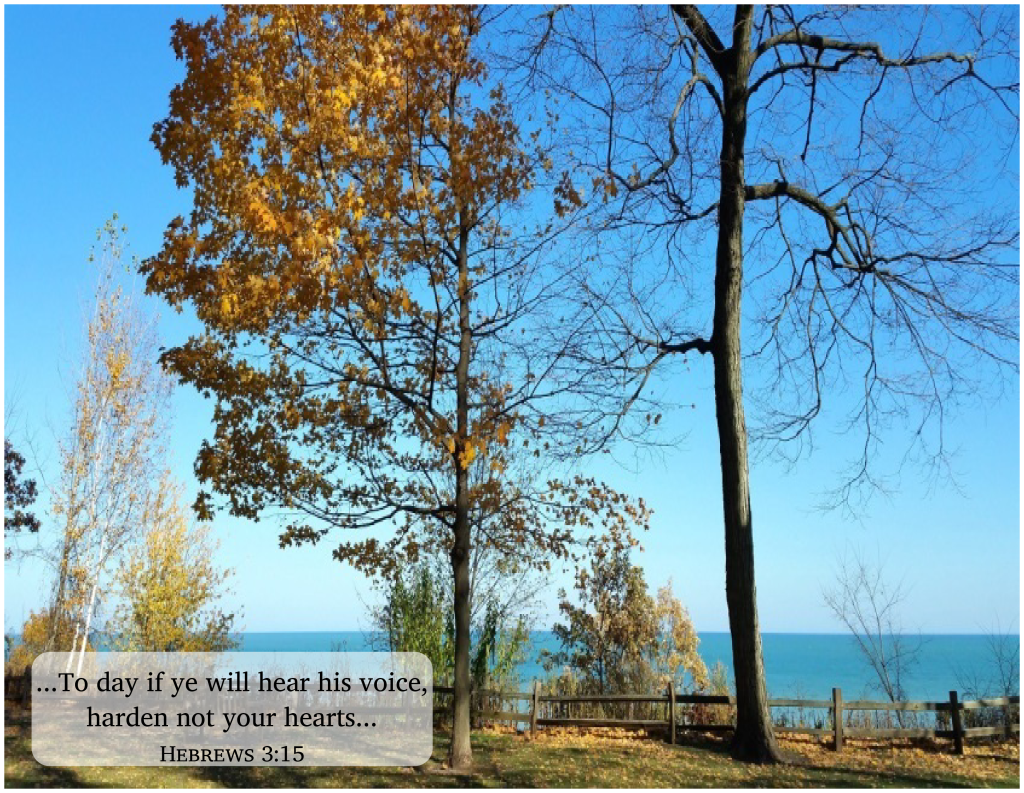
Dale offers the prompt “landscapes” for this week’s Cosmic Photo Challenge.


Dale offers the prompt “landscapes” for this week’s Cosmic Photo Challenge.


The words we say like deeds we do
could let the wandering devils through
to grab our mouths, our bodies, too.
Decide to serve the Lord.
______
Ronovan Hester offers the inspiration “decisions” for this week’s Ovi Poetry Challenge. Also posted on Poet’s Corner.
1 Peter 5:8 NKJV
Be sober, be vigilant; because your adversary the devil walks about like a roaring lion, seeking whom he may devour.

When Claude was twelve years old he got tuberculosis. He began singing a new song as his family prayed for his recovery.
He sang that no grave could hold his body down. He sang about bands of angels coming for him to take him to Jesus.
The Lord loves to foil the dastardly deeds of the devil.
So did Claude as he received his healing.
______
Denise offers the prompt word “foil” to be used in this week’s Six Sentence Stories.
Psalms 96:1 KJV
O sing unto the LORD a new song: sing unto the LORD, all the earth.

Dale offers the prompt “the nights are drawing in” for this week’s Cosmic Photo Challenge.


John Hartnett reviewed Jason Lisle’s Anisotropic Synchrony Convention (ASC) model in 2011. Hartnett’s own solution of the light travel time problem (LTTP) used time dilation and the Einstein Synchrony Convention (ESC) which can be explored in more detail in Starlight Time and the New Physics.
Hartnett’s review helped me better understand what was going on with these creationist solutions to the LTTP. The rest of this post goes into the details of some explorations I’ve made.
What is the LTTP?
In the 1670s Ole Roemer first found that the speed of light was finite. In the 1830s Thomas Henderson first measured the distance to a star, Alpha Centauri, at about one parsec, over three light years away. Those two measurements, in the context of the absolute space and time of Newtonian physics, are all that was needed to challenge the truth of Genesis.
Since we can see the light from Alpha Centauri the universe should be as old as the time it takes for light to travel from that star to us. With the speed of light being finite and this star being very distant, Adam could not have seen it on the 6th day.
The LTTP is the conflict between the biblical age of the universe and the amount of time light needs to reach the earth from distant stars. In the 19th century deep time became a misleading scientific fact. This encouraged two unfortunate responses to the Bible: 1) reject it entirely or 2) turn its historical content into allegory.
Relativity Theory
Relativity theory gave creationists two ways to resolve the LTTP. They could either use a synchrony convention as Lisle had done or they could use a time dilation approach as Hartnett (and others) had done.
Einstein’s resolution of the conflict between Maxwell’s electromagnetic theory and Newton’s gravitational theory put the finite speed of light as a limiting speed and all observers regardless of their relative velocities would measure the speed of light as the same value. Since velocity is distance (space) divided by time, the trade-off for making a specific velocity absolute meant that space and time no longer were. Different observers might measure times or distances differently. In particular, what clocks read are dependent on the reference frame the clock is in.
This allowed time dilation solutions to the LTTP.
When one measures the speed of light one is measuring a two-way speed. This avoids having two clocks which cannot be trusted to remain synchronized in relativity theory when one clock is moved away from the other.
This allows one a choice of synchrony convention where the speed of light in one direction could be different from the return speed. The only requirement is that the round-trip speed be constant.
For example, if an object 13 billion light years away became visible on earth the age of the universe could be, by picking the appropriate synchrony convention, anywhere from 0 years old to 13 * 2 = 26 billion years old since the round-trip distance going to that object and back again is 26 billion light years. It no longer had to be 13 billion years.
By the way, we know the universe is more than 0 years old because secular historical records go back around 5000 years, but we do not know that from relativity theory itself.
This allowed synchrony convention solutions to the LTTP.
An objection to the ASC model
Those using the ASC model choose a synchrony convention where the light leaving the observer is half the two-way speed of light. This allows the return trip of the light to be nearly instantaneous.
An objection one might make against Lisle’s ASC model is that it is based solely on a choice of synchrony convention. Someone else could make a different choice and construct a different model conflicting with Genesis. That’s true, but that there is now a choice solves the LTTP.
This left creationists with the challenge to provide evidence that the entire universe is actually young, not just that it could be viewed as young from a specific synchrony convention. However, much of that work had already been done.
Mature creation and natural processes
Genesis 1:1 tells us that the earth is special: God spoke it into existence on the 1st day. Genesis 1:16 tells us where stars came from: God spoke them into existence on the 4th day. All of these creations were mature creations. They were not the result of lengthy natural processes because they all happened within a single day. Indeed, for much of God’s creative work, such as, matter itself, stars, planets, and the first plants, first fish, first birds, first beasts and first human beings there are no natural processes available that could bring them into existence no matter how much time is available.
Those who only put their trust in natural processes want nothing to do with creation, mature or otherwise. By relying on natural processes they hope to discover laws that explain the existence of the universe without God’s creative work. One of the beliefs they’ve come up with is the hope that universes can randomly pop themselves into existence. Another belief is that there are infinitely many of these popped universes one of which would be the one we are living in.
No one ever popped a universe into existence. They have to assume it is possible for something like that to happen. If that were not possible, then they would have to give God credit for his mature creative work, something they do not wish to do.
Although they are aware that the above is an assumption (or, rather, a theory), they’ve made another assumption that they are likely unaware of. They believe that the orderliness of natural laws governing the natural processes they observe are somehow independent of God. However, if natural law is “the normal way God upholds the universe today”, as Hartnett notes on page 60, then there would be no natural processes whatsoever without God.
What could falsify the ASC model?
Most creationists reject using the idea of mature creation as an explanation if it would imply deceptiveness on God’s part. For example, they reject the instantaneous creation of light in transit as a solution to the LTTP. Such light would not have originated from the star although it would have appeared to have. That would have been deception.
Hartnett challenged Lisle to come up with ways to falsify his model. At what point would one have to give up on the ASC model and go to Hartnett’s time dilation approach?
Given the rejection of deceptive mature creation all one would need to reject the ASC model is to find an ongoing process that would take longer than the biblical age of the universe to reach the state it is in. Light travelling over long distances was such a process that the ASC model eliminated. Are there any others?
An example of such a process might come from the expanding remnant clouds of unobserved supernovas. If their rates of expansion from their neutron stars implied that they had been expanding longer than the biblical age of the universe, then this would be a deceptive mature creation that would falsify Lisle’s model. Lisle did not believe that any such example had so far been found.
What is the biblical age of the universe?
Chris Hardy and Robert Carter calculated a minimum and maximum age of the earth that could be identified as biblical because some collection of biblical manuscripts supported it. Although the discrepancies in these manuscripts are small, the numbers found in different manuscript versions of the genealogies of Genesis 5 and 11, for example, can lead one to compute rather different ages.
Accounting for all presently known relevant details and assuming the Babylonian Captivity began in 587 or 586 BC, we can say with confidence that the Bible places limits on the year of creation between 5665 and 3822 BC. The uncertainty within this range is mainly driven by textual considerations. The Masoretic/LXX debate creates a 1,326-year dichotomy, the Long vs. Short Sojourn positions differ by 215 years, and various interpretations of the lists of the kings of Judah and Israel equates to around 54 years of additional uncertainty.
– Chris Hardy, Robert Carter, The biblical minimum and maximum age of the earth, Journal of Creation 28(2):89–96, August 2014
Taking the Masoretic/LXX debate, the Long vs Short Sojourn and the list of kings of Judah and Israel into account results in an overall difference of 1843 years. Within that range one can identify two major, conflicting creationist positions. The older position puts the date of creation at about 5500 BC (with the age of the earth about 7500 years) while the younger position puts it about 4000 BC (with the age of the earth about 6000 years).
Since both Lisle and Hartnett refer to a 6000 year age of the earth rather than, say, a less than 8000 year age, I assume they are committed to the younger creationist position.
Both of these creationist positions depend on the global catastrophe of Genesis 6-9 to explain why the earth looks the way it does today with mountains, glaciers and planation regions. Hence, it is worth identifying when that occurred.
Hardy and Carter give maximum and minimum years for the flood as 3386 BC and 2256 BC with a difference of over a thousand years. The older creationist position puts the date of the flood around 3300 BC (about 5300 years ago) while the younger dates it around 2350 BC (about 4400 years ago).
In terms of falsifying Lisle’s theory, if he insists on the younger creationist position, processes that began after creation can take no longer than about 6000 years. If a process is found that takes less than 7500 years but more than 6000 years he could maintain his ASC model but reject the younger creationist position for the older one. Only if the process required more than 7500 years (specifically, 7688 = 5665 + 2024 – 1 years using Hardy and Carter’s data and today’s year 2024) would Hartnett’s time dilation model be needed.
Unreliable clocks
There are people who will say things are old using a radioactive decay clock. Their dates have to survive the challenge that radioactive decay rates may have changed in the past leading to the clock they are using being unreliable. One way to verify that their clocks are reliable would be to require that the dates they offer are confirmed by another clock whether those clocks are based on radioactive decay, erosion or biological decay. If the other clocks don’t agree, then the date has been falsified.
Here are three examples of unreliable clocks.
Reverse challenges to deep time
Don Batten’s 101 evidences for a young age of the earth are 101 challenges for those believing in deep time, challenges which have not been met. Batten writes:
When the evolutionists throw up some new challenge to the Bible’s timeline, don’t fret over it. Sooner or later that supposed evidence will be turned on its head and will even be added to this list of evidences for a young age of the earth.
The correct response in the 19th century prior to relativity theory would have been to accept the self-attesting authority of the Bible rather than bend a knee to the views of man. Does that sound like too strong of a commitment to the Bible? The Bible is, after all, the word of God. Only a fool would not have a strong commitment to it.
By contrast, it’s a wonder that anyone (in his right mind) would be so committed to big bang fairy tales that he would prefer to sprinkle his eyes with dark matter—dark pixie dust that no one can find—rather than face the truth that his atheology has been falsified long ago.
______

The James K. Polk birthplace near Charlotte, North Carolina, is only a few miles from where we live. Although the original buildings are no longer there materials from other homes from the early 1800s were used to make these reconstructions.
The first photo shows an overview of the site.
The others feature doors and details in the main house on the left.


Posted as part of Thursday Doors.

Offended? But that doesn’t count.
I won’t expect what can’t amount
to anything. We want His fount,
His well of living water.
______
Ronovan Hester offers the inspiration “expectations” for this week’s Ovi Poetry Challenge. Also posted on Poet’s Corner.
John 4:10-14 KJV
10 Jesus answered and said unto her, If thou knewest the gift of God, and who it is that saith to thee, Give me to drink; thou wouldest have asked of him, and he would have given thee living water.
11 The woman saith unto him, Sir, thou hast nothing to draw with, and the well is deep: from whence then hast thou that living water?
12 Art thou greater than our father Jacob, which gave us the well, and drank thereof himself, and his children, and his cattle?
13 Jesus answered and said unto her, Whosoever drinketh of this water shall thirst again:
14 But whosoever drinketh of the water that I shall give him shall never thirst; but the water that I shall give him shall be in him a well of water springing up into everlasting life.

Stephen worked on his speech the whole week to make sure every word and every pause, noted with a comma, was just right.
When the day came for him to speak he didn’t want to forget anything. He printed his speech in big letters on many sheets of paper so he could see the words clearly.
As he looked out upon the crowd who were wondering what he would have to say gusts of wind carried away those sheets of paper leaving him with, seemingly, nothing to rely on as he spoke.
Although what Stephen said was in line with what he had prepared the words that came out of his own mouth surprised him. The crowd prepared its punch with murderous anger but when it was all over Stephen was carried away, victorious, by the King of glory.
______
Denise offers the prompt word “punch” for this week’s Six Sentence Stories.
Acts 7:54-56 KJV
54 When they heard these things, they were cut to the heart, and they gnashed on him with their teeth.
55 But he, being full of the Holy Ghost, looked up stedfastly into heaven, and saw the glory of God, and Jesus standing on the right hand of God,
56 And said, Behold, I see the heavens opened, and the Son of man standing on the right hand of God.