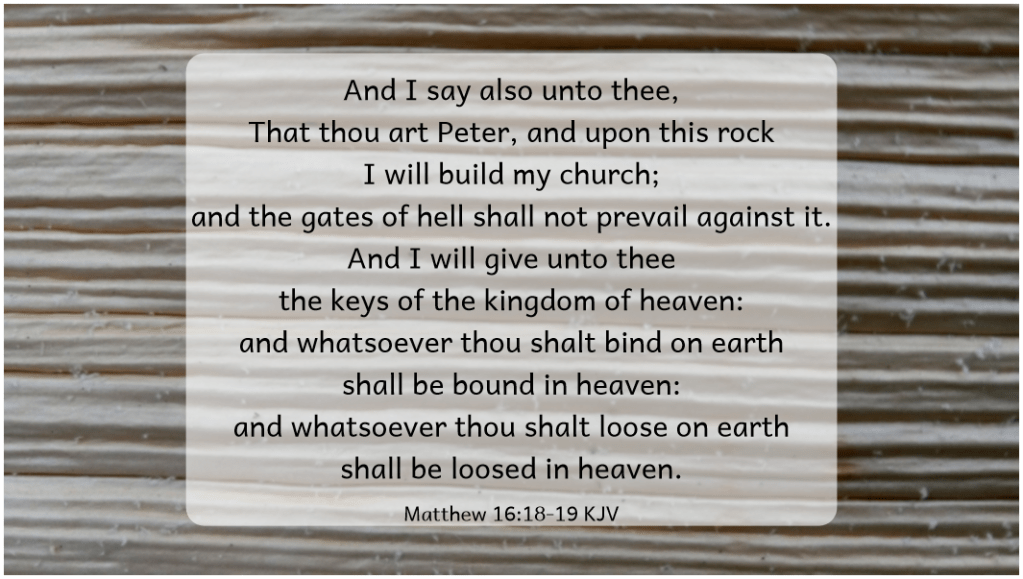
When reading the Bible online I have found Blue Letter Bible to be very helpful. I can copy verses and then paste them on photos (like the one at the bottom of this post). It also includes a well-formatted interlinear option among other tools.
Sometimes I just want to hear the Bible read slowly with the dialog dramatized. The Time Is Up channel offers such a dramatized, slow reading of the books of the Bible. Earlier today, I listened to Daniel.
Time Is Up
The Bible Society in Israel also offers dramatizations of the scriptures, but these are in Hebrew.
Don’t know Hebrew? It’s not that hard to learn, at least to learn well enough to not be intimidated by an interlinear translation, but ask the Holy Spirit if learning Hebrew is what you should be doing now. If He encourages you, one resource that has helped me is the Alef with Beth biblical Hebrew lessons.
Alef With Beth
Whether you know Hebrew or not there are many wonderful songs you can enjoy such as those offered by Shilo Ben Hod and MIQEDEM.
I have been studying Biblical Hebrew primarily using the YouTube videos from the Aleph With Beth channel by Andrew and Bethany Case. The Bible Society in Israel offers the Hebrew Bible with a dramatized audio reading and dictionary. They have also translated the Greek New Testament into Modern Hebrew and made this available with an audio reading. One can add a column to compare two versions of the text. As an alternative, I have also used the Step Hebrew Interlinear Bible.
I recommend all of these resources if you are interested in learning Biblical Hebrew. If you have other resources you are using that you find helpful, let me know. I still have a long way to go.
My goal is to be able to read the Masoretic text found in the Biblia Hebraica Stuttgartensia without needing a dictionary. I am not there yet. Here is a song by Miqedem on Psalm 23 that I am trying to understand by hearing it sung without following along with the Hebrew-English text.
The Old Testament was written in Biblical Hebrew. Douglas Petrovich provided evidence that the Israelites possessed an alphabet centuries before Moses. If that’s true there is no longer a compelling reason to follow theories like the JEDP/Documentary Hypothesis which claimed that Moses could not himself have written the first five books in the Bible because he did not have the means to do so. Moses had what he needed to write those books and the Israelites were able to read them.
I used to think that Aramaic was the language Jesus spoke. However, Jeff A. Benner provided evidence that most of the New Testament was originally written in Hebrew which was also the language spoken by Jesus and his early followers. If that’s true then what we have today are translations of the Hebrew originals into Greek from which English translations were later made.
Some early form of Biblical Hebrew may have been the original “one language” (Genesis 11:1KJV) spoken until the time of the Tower of Babel. For arguments for and against this, including Isaac Mozeson’s Edenics, see Bodie Hodge’s discussion of language before the time of Moses. Mozeson notes that many Jewish commentators see this one language as Biblical Hebrew. For further information on his view see A Garden of Edenics 2021.
Weekly Bible Reading:Daniel (Audio), Hosea (Audio) 24 Cheshvan, 5782, Chayei Sarah: ParashatGenesis 23:1-25:18; Haftarat1 Kings 1:1-1:31 Commentaries: David Pawson, Daniel, Part 46, Hosea, Part 47, Unlocking the Bible Bible Project, Daniel and Hosea


 Poetry, Short Prose and Walking