I took these photos a short walk from where we now live.
The leaves below are either from a sweetgum tree or a sycamore or something else entirely. The sunset in the bottom photo was taken from the other side of the pond shown in the top photo.
33 Again, ye have heard that it hath been said by them of old time, Thou shalt not forswear thyself, but shalt perform unto the Lord thine oaths: 34 But I say unto you, Swear not at all; neither by heaven; for it is God’s throne: 35 Nor by the earth; for it is his footstool: neither by Jerusalem; for it is the city of the great King.
Matthew 5:33-35 is the kind of passage that I’d likely skip over, because I didn’t understand it. Is Yeshua replacing the law of not swearing falsely in YeHoVaH’s name with not swearing at all?
Nehemia Gordon translated the problematic portion of verse 34, rendered by the KJV as “Swear not at all”, from the Hebrew manuscripts in The Hebrew Yeshua vs. the Greek Jesus, page 65, as “you must not swear by anything falsely”. George Howard translated this portion of the manuscript as “But I say to you not to swear in vain in any matter” (page 21).
The difference is between not swearing at all and not swearing falsely (or in vain) by anything, let alone by YeHoVaH’s name. The Hebrew text does not prohibit swearing, but swearing falsely. Now that I understand. It makes sense.
According to Gordon, Yeshua countered a Pharisaic teaching that permitted one to swear falsely as long as it was not in the name of YeHoVaH. Gordon writes, “This strange doctrine was based on an over-literalization of Leviticus 19:12, “you shall not swear falsely by My name.”” (page 65-66). According to Howard, this raised a striking contrast between the Greek and Hebrew texts: “In the Greek, Jesus appears to revoke the law; In the Hebrew, he internalizes and radicalizes the law, but does not revoke it.” (Hebrew Gospel of Matthew, page 213)
What this tells me is that we need these Hebrew manuscripts to better approximate what the original autographs actually said. It also increases my suspicions that the Greek manuscripts were translations from a Hebrew source since this Hebrew manuscript still makes sense.
The puzzle looked like confused confetti so I jumped right in to set things straight. No piece was totally benighted because each had a right side though some of them displayed their wrong sides up. I was grateful for those few that had edges.
With all pieces properly placed (except for those the dog ate) the puzzle displayed an image of white puzzle pieces scattered on a dark table waiting for someone to jump in and straighten them out.
And that’s all there is to this confused tale. I’m still wondering why I jumped into that mess of confetti.
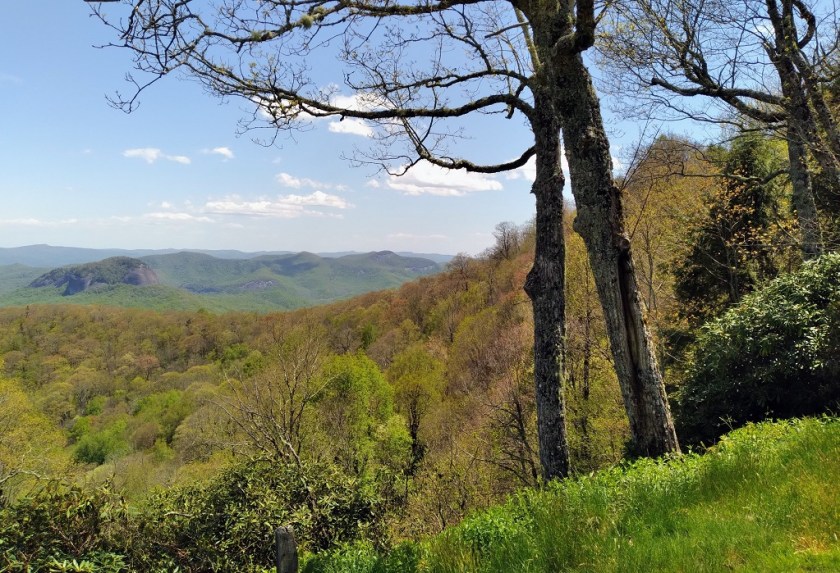
Above the sunrise comes in and through the trees (Miami Beach, Florida), assuming palm trees, or whatever they are, qualify as trees. Below there is snow in, or on, the trees (Northbrook, Illinois). And below that there’s a park and mountains in the trees or perhaps it is the other way around (Garden of the Gods Park in Colorado Springs, Colorado).
Streetlight and Snow in the TreesPark and Mountains in the Trees
After adding Jewish and Messianic Jewish parashah readings, I began studying the ancient biblical calendar assuming such a calendar even existed. This calendar would be different from the Christian calendars (Catholic, Protestant and Orthodox) with holidays like Christmas, Ash Wednesday, Good Friday and Easter (Pascha). It would also be different from the rabbinical calendar at Chabad.org with a time since Creation of only 5782 years that follows a mathematical 19-year (Metonic) cycle for leap years.
The appointed times of YeHoVaH are Passover, Unleavened Bread, First Fruits, Shavuot, Trumpets, Yom Kippur and Succoth from Leviticus 23 along with the weekly Shabbat. The biblical calendar needs to determine when to observe them so we can rehearse them as prophecies while remembering their fulfillments. There are also historical events which need to be dated, a year assigned to the Creation (or some other starting point), and an estimate when to expect the Messianic Kingdom.
I thought this would be an easy study, but I am still trying to make sense out of it. Here are three attempts to describe that biblical calendar that differ from both the modern Christian and Jewish calendars.
Navah’s The Reckoning of Time. He presents the evidence so clearly and in such great detail that I use this account as my baseline when reading others, keeping in mind that he might be in error.
World’s Last Chance: Yah’s Calendar. This calendar maintains that the biblical day extends from sunrise to sunrise, not sunset to sunset, that the Sabbath always occurs on the 8th, 15th, 22nd, and 29th day of the month, and that the first of the month is a special day of rest.
Who controls the whirlwind? All one can hope when the debris settles is to find something left of value.
When Benjamin saw the twister head straight for the farmhouse he yelled to his wife to get the children. While they were driving away she noticed that the tornado had changed direction as if it were chasing them. With the sound of the wind ripping trees apart Benjamin braked, turned into the entrance of a field, backed out to face the opposite direction, shifted into first, accelerated, shifted into second, accelerated, and shifted into third to accelerate out of the reach of the advancing wind.
If that twister really did want to get them it miscalculated since it left chickens, cows, sheds, tractor, cellar and the farmhouse, all of it, intact and untouched, but glowing with Benjamin’s and his family’s praise rising heavenwards sweetened with gratitude.
Denise offers the word “control” to be used in this week’s Six Sentence Stories.
Proverbs 10:25, “As the whirlwind passeth, so is the wicked no more: but the righteous is an everlasting foundation.” (KJV)
Dale offers the prompt “faces” for this week’s Cosmic Photo Challenge. There’s a white bird looking at me above wondering what I’m doing and a grasshopper who let me take many photos of him.
Normally I don’t take recognizable photos of people. However, I do have a photo of myself which someone else took and that is below.
Sometimes we use words that subtly undermine what we value without our realizing it. I am trying to identify these words so I can avoid using them.
For example, when we say parents are we undermining the differences between fathers and mothers by lumping them under one term? Is the word gender similarly undermining the differences between the sexes, men and women? According to Owen Strachan they do.
In this post I want to focus on (1) mutation, (2) evolution and (3) natural selection. With a biblical creationist worldview, should I be using or avoiding these words? If I choose to avoid them, what alternative words should I use to reinforce rather than undermine my values?
Mutation
Mutations in DNA is the only one of the three that has usefulness from an operational scientific perspective because it represents something that can be measured which could falsify an hypothesis. Random mutational changes in DNA allow us to look back into our past. Measured rates of mutations allow us to anticipate future mutational meltdown through genetic entropy.
Random mutations do not support evolutionary change from something simple to something more complicated. Like other mechanisms found to operate in the natural world it is a measure of decay or entropy. It can only reduce what is complicated to something simpler. Since this does not go against my values I have no need to look for an alternative.
Evolution
However, when I use the word evolution indiscriminately for any kind of observable change I reinforce the idea that alleged unobserved Darwinian evolution is possible when I would claim it is not. A safe alternative for observable changes is simply to say change.
There are no random mechanisms in the natural world that could account for the kinds of unobserved changes needed to go from non-life to life or from slime mold to mankind over any time period. We would not be here today without an act of creation if we relied only on random, natural processes.
Natural Selection
Is it safe to use natural selection to describe the changes that occur within kinds of creatures through random mutations? Charles Darwin created the term natural selection to try to project agency onto nature where no agency exists. The goal was to replace the Creator from Genesis with a mindless nature that somehow could make selections.
In the video below Lauren Pennington interviews Dr. Randy Guliuzza to first show the problem with the term natural selection and then to propose an alternate way of describing change in living creatures.
If you know of other words that we should think twice about using, let me know in the comments.
People faulted Blake as someone who liked to run around, a term that usually meant he couldn’t stop starting and stopping stuff, popping in here and then suddenly there, or jabbering about this and then that longer than most listeners, they in particular, could tolerate. He wouldn’t dream of denying their charges since he viewed his defects as features except when others exhibited them.
All this running around focused his waking hours on optimizing the quantity of funds he could turn over to questionable, but good enough, causes with little time left over to deal with his own problems. As his future turned into his past and the measurable score of his good deeds exploded, he anticipated that there would be an endless supply of more of the same in spite of knowing that entropy makes a mess of most things.
Reality intervened one day like a waiter bringing a tab he didn’t know he started. Trying to find something of value with which to pay the bill he was surprised to learn that the busyness of his effective altruism provided little, if any, positive value in his present situation to keep the demonic darkness from coming in and taking him out.
Whispers and Echoes recently published a 100-word story of mine called Spotting the Heretic. I am grateful to the editor, Sammi Cox, for selecting it. Submissions to this online journal are currently open.
What you see above is part of a rather large sand turtle that lasted about a day at Myrtle Beach before the tide washed it completely away.
Below is a flower painted under a bridge that went over a brook for trains passing through an Illinois forest preserve. The forest trail following the brook went under this bridge. The graffiti kept changing over the period of time I walked that trail. I imagine by now that flower, like the sand turtle, is no longer there.
Flower
Whispers and Echoes recently published a 100-word story of mine called Spotting the Heretic. I am grateful to the editor, Sammi Cox, for selecting it. If you would like to submit very short stories or poems here are the guidelines.











 Poetry, Short Prose and Walking