The stakes were high for those who played It wasn’t just another game. It wasn’t just more of the same that one could flee when brightness grayed.
It was a time for those who prayed. It was the ending of the war and those connected to the core rejoiced. Their blood flowed through the heart. That victory tore death apart from life and that forevermore.
Ronovan Hester offers the rhyme word “core” to be used in a C line of a décima having rhyme pattern ABBAACCDDC for this week’s challenge. I was thinking of Revelation 20.
An idol does not have to be an entity like Gaia or Satan. It could be a mythopoetic explanation for the way things are such as Evolution or the Big Bang that gives “credit to some power other than God for what God has done” .
Explanations help us understand the world we live in. The Big Bang would be one explanation. The Creation account in Genesis would be another. How do they compare?
If we consider the Creation account of the universe by God over a period of six days in a mature state about 6000 years ago the universe would look then much the way it does today since only a few thousand years have elapsed. Those who object to this presuppose either that there is no God who could have created a universe or that God did not create the universe as the Bible claimed. They either deny God or they deny the biblical account.
Those denying the biblical account have raised a specific doubt that has led some Christians to agree with them. According to Genesis on the fourth day the stars became visible. How did that happen if the light came from stars billions of light years away? The speed of the light coming from those stars to an observer on earth would have to be arbitrarily large. This is called the distant starlight problem.
Is such an arbitrarily large speed of light possible in relativity physics? It is if the Bible is using what Jason Lisle calls theanisotropic synchrony convention (ASC). I have often heard that the speed of light is a constant of nature given relativity, but as Lisle explained what is actually constant is the round trip or two-way speed of light with there being no way for anyone to know the one-way speed.
By convention we could set the speed of light coming to the observer on earth as instantaneous, that is, having an arbitrarily large speed, and set the speed of light leaving earth as the two-way speed of light divided by two. If we did that then the speed of the round trip would average out to be the constant two-way speed of light as required. That is what the ASC convention does. It defines simultaneous events as what we see at any moment from our position on earth.
This answers the objection of those denying the biblical account. On the fourth day of Creation the light coming from all of the stars in the universe reached earth as Genesis reported using the ASC convention.
The other common convention used is the Einstein synchrony convention (ESC) where we assume, or stipulate, that the one-way speed of light is the same in all directions. The laws of physics work no matter which convention we select. As Lisle pointed out it is like choosing to use inches over centimeters. No falsifiable prediction can be made from either the ASC or the ESC convention alone.
However, if we take the ASC convention and add to it the Creation account of the mature universe with the 6000 year time frame of the Bible, we can come up with falsifiable predictions. Lisle calls this the ASC model. That model would be falsified if there existed evidence showing that the universe had to be more than a few thousand years old.
By contrast the Big Bang model claims that the universe is over 13 billion years old. It needs all of that time for physical processes starting from a random event to form the universe we live in without resorting to a designing agent of any sort. That model would be falsified if there existed evidence that the universe could not be that old.
As Lisle pointed out our observations of spiral galaxies or blue stars provide falsifying evidence for the Big Bang. We should not see them in such an old universe. That means the universe is too young for the deep time predictions of the Big Bang model. The Institute for Creation Research provides further details on this and additional evidence that the universe and our earth are young, too young for deep time explanations to be true.
Bottom line: If we want randomness rather than God as our Creator, we need a lot of time, more time than evidence shows was available.
Given that here is what Pastor Allcorn has to say about idolatry.
Merging the Big Bang or Evolution with Christianity is a form of syncretism which introduces idolatry. For what it’s worth, I was one of those who used to believe in deep time speculations, but now I see the error in that. I would even go so far as to agree with Pastor Allcorn that my former views were idolatrous.
Weekly Bible Reading:1 Kings (Audio), 2 Kings (Audio), 1 Chronicles (Audio), 2 Chronicles (Audio) Commentary: David Pawson, 1 and 2 Kings, Part 2 of 2, 1 and 2 Chronicles, Part 1 of 1, Unlocking the Bible
When demons push their hostile lies, trashing truths to trip and stumble, laughing through deceit they mumble then justice seems the one that dies.
But round the world comes other cries of those who know that all’s not lost. It never was. With rough waves tossed the darkness hides the light from day pretending dark’s the only way. A holy life is worth the cost.
Ronovan Hester offers the rhyme word “mumble” to be used in a B line of a décima having rhyme pattern ABBAACCDDC for this week’s Décima Poetry Challenge. Eugenia offers “round the word” for this week’s Thursday Prompt. I am thinking of Leviticus 11:45 and 1 Peter 1:16.
I recently went on a tour of the Oriental Institute of the University of Chicago led by Ted Wright, Executive Director of Epic Archeology. After exploring his site here are a few of the many topics I found of interest.
Among the top 10 things to know about Biblical archeology are that “every major New Testament village and town has been discovered”, the Book of Acts records accurate geographic references, and there is an “historical synchronism” between the Assyrian record and the Old Testament regarding Sennacherib’s sacking of Lachish and the siege of Jerusalem. The prism containing the annals of Sennacherib is on display in the Oriental Institute.
The uraeus representing the Egyptian goddess Wadjet was a cobra often seen on the heads of statues of the pharaohs. When the Israelites yearned to return to Egypt, God sent them poisonous snakes to remind them what would be waiting if they went back (Numbers 21). As a cure for the bites Moses hung a copper snake on a pole which was how John 3 represented Jesus on the cross.
The references to Pharaoh hardening his heart is evidence that Exodus was written by an eye-witness who knew the Egyptian Book of the Dead where a weighty, hardened heart meant a miserable afterlife.
In the video below Ted Wright reviews one of the documentary films in Timothy Mahoney’s Patterns of Evidence series. Some of the questions asked in these documentaries are whether the Exodus and Conquest happened in the 15th century BC, where was the Red Sea crossing and whether Moses would have been able to write the Torah.
There is also the question of whether Hebrew is the language of “the world’s oldest alphabet”, a position held by Douglas Petrovich. The discovery of the origin of the alphabet involved the discovery of Joseph, Manasseh and Ephraim at the beginning of the Sojourn in Egypt at Avaris. As Petrovich presented the data, they would have been the most likely inventors. This alphabet made it possible for Moses to write the Bible and for the Israelites to read it.
Weekly Bible Reading:1 Samuel (Audio), 2 Samuel (Audio), 1 Kings (Audio), 2 Kings (Audio) Commentary: David Pawson, 1 and 2Samuel, Part 2 of 2, 1 and 2 Kings, Part 1 of 2, Unlocking the Bible
Six months after Brian was hit by the bus, he looked for and found Martha in the Art District Park. He told her that he tossed his pendulum and tarot cards in the trash and stopped doing those “mindless kundalini meditations”. Although this was the first time he spoke to her since his accident and in spite of being aware of her “unfortunate distraction” with George, Brian asked Martha if she would marry him in a real church.
Martha wondered if the “real church” Brian was thinking of was Brother Jeremy’s chapel recalling how they both bullied that pastor mocking him to his face for his “delusions”. She also wondered if Brian expected her to give up her yogic devotions to that unresponsive energy field identified by people like herself as Shakti.
Martha hoped so, and knowing Brian she knew so, and so she answered, “Yes!”
The ocean’s waves press to the beach. They soak the sand then move away. Some rough, some calm, throughout the day indifferently the waters reach.
Persistently the pastors preach repentance; Kingdom! Some don’t care, but others do. Stay standing there. Sing words, like waves upon the shore, to offer praises ever more. May all who’d hear join in the prayer.
Ronovan Hester offers the prompt word “beach” to be used in an A line of a décima having rhyme pattern ABBAACCDDC for this week’s Décima Poetry Challenge.
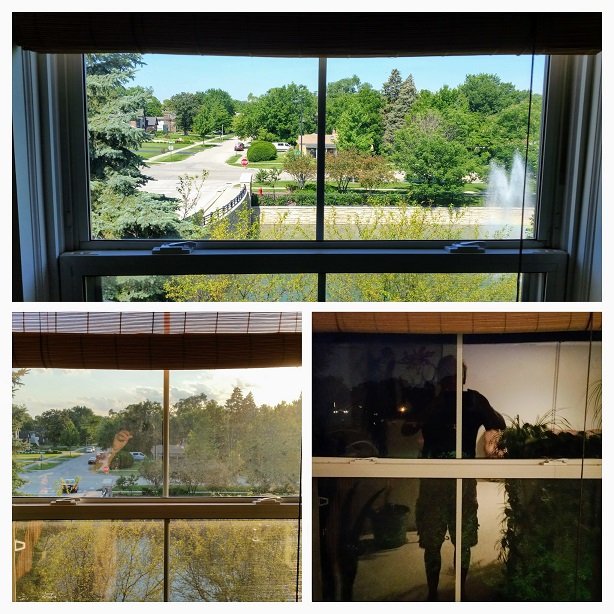
Dale offers the theme “drain the color” for this week’s Cosmic Photo Challenge. More specifically, he writes, “I would like you to capture the brightest, most vivid subjects you can find and then; Drain the colours.”.






















 Poetry, Short Prose and Walking