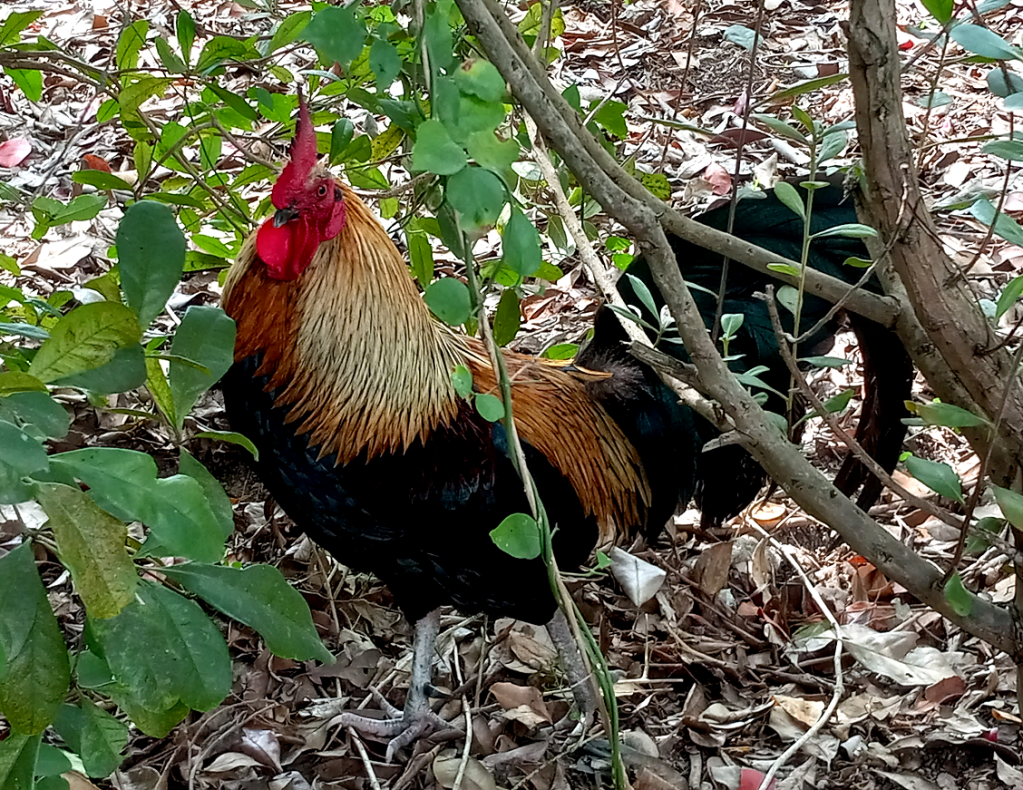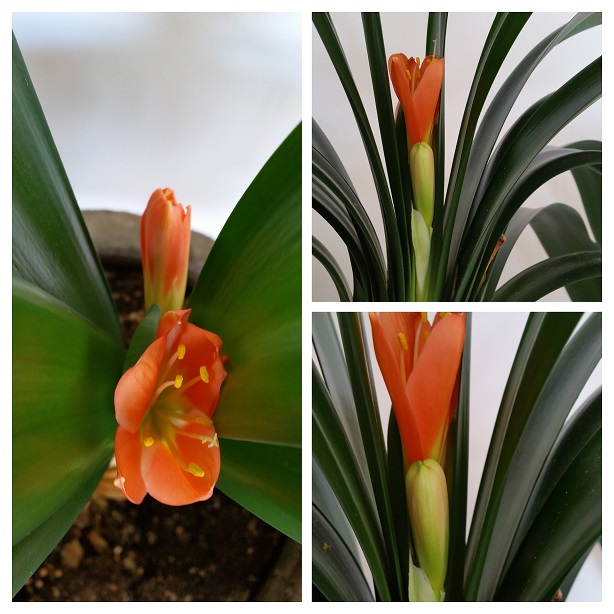
Dale offers the prompt “art from nature” for this week’s Cosmic Photo Challenge. I chose a fall flower with a bug, a huge leaf with a heart-like center and the shapes that happen to sand when people walk on it.


Dale offers the prompt “art from nature” for this week’s Cosmic Photo Challenge. I chose a fall flower with a bug, a huge leaf with a heart-like center and the shapes that happen to sand when people walk on it.


Some people pronounce the divine name in the Bible represented by the four Hebrew letters, yud-hey-vav-hey, YHVH, יְהוָ֤ה, as “Yahweh”, but is that correct?
The following are some arguments in favor of Yehováh (accent marked on the last syllable to distinguish it from “Jehovah”) as the divine name.
Here are arguments favoring “Yahweh”.
If anyone has more information, or a strong opinion one way or the other, you are welcome to comment.
There is a third position presented by the International Alliance of Messianic Congregations and Synagogues Steering Committee (One Law, Two Sticks, 1-15-2014, page 10) : The problem with praying to God by His so-called “sacred name,” was that nobody was really quite sure what it was. Some said it was “Jehovah,” while others decided it was “Yahweh,” and there were other forms as well. This position would prefer a title such as Lord or Adonai than a specific name.
Until recently this third position was the one I followed saying “May the Lord bless you” rather than may Yahweh or Yehováh bless you. However, it raises the question: Should I be invoking a title when the Hebrew text offers an explicit name?
This issue concerns me because I have unwittingly believed things that I later wished I had not. Until I read Andreessen discuss the “Yahweh heresy” and its suspected origins in “liberal Theology” I had no problem with the ancient Yahweh pronunciation although I didn’t use it. Now I wonder whether the introduction of Yahweh a couple of centuries ago had been part of a larger deception. I don’t want to be fooled any more.
In the video below Nehemia Gordon provided evidence for the divine name being Yehováh citing 16 rabbis who explicitly stated that the correct vowels were sheva, cholam, and kamatz. He did not find anywhere in the database of historical Jewish documents the name Yahweh (about 29:00 in the video). This is the view I now favor.
Weekly Parashah Readings
Parashah: Tzav 16 Adar II, 5782 – March 19, 2022
Torah: Leviticus 6:1 – 8:36
Haftarah: Jeremiah 7:21-28; Jeremiah 9:22-23
Brit Chadashah: Hebrews 7:24 – 8:6
Resources: Chabad, Hebrew4Christians, Weekly Torah Readings, Calendar

Fallen Palm Branch
The watchers on the wall will sound
the trumpets warning should they see
the enemy. Persistently
we’ll hold the line. To Him we’re bound.
It’s up to us to stand our ground.
Survival and salvation: May
we thank the Lord for every day
He gives to let our voices roar,
our praises to the heavens soar.
We hear His voice. We rise, obey.
Ronovan Hester offers the rhyme word “roar” to be used in a D-line of a décima having rhyme pattern ABBAACCDDC for this week’s challenge. Eugenia offers “survival” as her prompt this week.

Brian didn’t realize how messed up his worldview was until he saw for himself the cracks. Meanwhile Kate itemized the consequences he’d have to face if he didn’t get his head screwed on straight.
The problem was Brian could no longer see the meaningless splatter as anything but garbage. Fifty years from now, perhaps, they’d wish they did things differently, but now, to stop the throbs of screaming, Brian and Kate split up.
Kate met a succession of knights sparkling with possibilities until their dragons (or her own) appeared. Brian covered the canvas with snow white pigment to hide the cracks and bury a voice coming from a source deeper than his own distracting addictions.
Denise offers “canvas” as the word to be used in this week’s Six Sentence Stories.

No meat offering, which ye shall bring unto the Lord, shall be made with leaven: for ye shall burn no leaven, nor any honey, in any offering of the Lord made by fire.
Leviticus 2:11 King James Version
Yehoshua Gordon explains why leaven and honey were not acceptable as offerings in his third lecture this week (about 8:00). The leaven represents human arrogance. Unleavened bread represents humility. Honey, or any sort of sweetness to us, represents our desires. We are to give Yehovah what He wants, not what we want.
That might explain why Cain’s offering in Genesis 4 was not as acceptable as Abel’s. Cain brought an offering of the fruit of the ground while Abel brought the firstborn of his flock. Was Cain’s offering perceived as arrogance? Did it contain leaven or honey or anything sweet?

Dale offers the theme “first hints of spring” for this week’s Cosmic Photo Challenge.
I assembled the collage below in March of last year.
This is not only what March looks like in southern Florida, it is also what April looks like. And February. And January. And December. And November.
I can’t complain even though I can’t tell what season it is.

…what’s it matter if it’s written in Hebrew or Greek and the answer to that is it doesn’t matter at all unless you care about the truth of Scripture and if you care about the truth of Scripture it makes a huge difference because everything we know about our Hebrew Messiah we know through a Greek filter….
Dr. Miles R. Jones, A Sit-Down Conversation with Dr. Miles R, Jones,
The Messianic Torah Observer Ministry of QFC, (about 1:14:25 in the video)
In a series of brief articles Jeff Brenner outlined an argument that Hebrew was the original source language for the New Testament. Here are four topics he covered:
There are surviving Hebrew manuscripts that could be viewed as copies of copies leading back to original autographs not translations from the Greek or Aramaic. Here are some sources describing and translating these manuscripts.
To understand why these manuscripts are important here are two problems that have been resolved by studying them.
Weekly Parashah Readings
Parashah: Vayikra 9 Adar II, 5782 – March 12, 2022
Torah: Leviticus 1:1 – 5:26
Haftarah: Samuel I 15:1-34
Brit Chadashah: Hebrews 10:1-18
Resources: Chabad, Hebrew4Christians, Weekly Torah Readings, Calendar

The Spirit dwells among us
and leads us night and day.
If His is our will, too,
we’ll rightly walk the way.
Those who believe in Yeshua (Jesus) are living temples of the Spirit of God who dwells among us (1 Corinthians 3:16). I learned from Yehoshua B. Gordon’s fifth portion of Pekudei that our being the tabernacle (tent, residence, dwelling place, mishkan) of the Spirit of God is also mentioned by Hebraic Sages.
The Pekudei readings cover the last portion of Exodus ending with Moses setting up the tabernacle on the first day of the first month (Nisan 1, the Biblical New Year) of the second year after leaving Egypt. Then the glory of the Lord dwelt in it.

With freeze and thaw of wintry woes
some fear the still-life’s gonna die.
Why spin the news so fast that I
can see the lies beneath fresh snows?
There is the Lamb that heaven shows,
the One who can unseal the book.
The losing side will try to hook
the world with sorrows. Persevere.
The sea of glass and fire comes here
with victory and praising. Look!
Ronovan Hester offers the rhyme word “hook” to be used in a C-line of a décima having rhyme pattern ABBAACCDDC for this week’s challenge. Eugenia offers the theme “still-life” as her prompt this week. A commentary on Revelation by Michael Rood was on my mind especially verse 15:2 which he kept referring to.

Zaccheus claimed that the scribes and sinners – err, Pharisees – were better at fleecing the sheep than the average tax collector. He loved ticking people off so much that Yehováh wondered if He would ultimately have to scratch Zaccheus’ name out of the Book of Life.
To get a better view of Yeshua, Zaccheus climbed a tree. To get a better view of Zaccheus, Yeshua told him to get out of that tree so He could stay at his house.
When Zaccheus did, Yehováh was pleased. He watched His Son walk side by side with a tax collector, of all people, both of whom were ticking everyone of self-importance off along the way.
Denise offers the word “book” to be used in this week’s Six Sentence Stories.
I am grateful to Michael Wilson who suggested using Zaccheus in a story. You can read what really happened in Luke 19:1-10.