July Challenge and Alien Artifacts

Jillys2016 offered a July Challenge for collaborative poetry.  One poet writes the first half of a poem and then another poet finishes it.  My four line poem “Home Tour” may be used for this challenge.  Pretend it is supposed to be an eight line poem and write the second half.

Here I try to complete Charley’s first half.  Charley’s part is in bold red.  It is a quadrille, a poem of 44 words.  He provided the first 22 words.  I have to add the next 22 words of the poem.


The bird broke
my concentration
when he pecked
the door.

“Anatomy of Melancholy”
from my fingers fell.

Closed, it hit the floor.

The bird came in.
He said, “Lenore.”

I said, “What?”

“Nevermore.”

“Never mind?”

“Anymore.”

I boot¹ the bird
and shut the door.


¹Some may argue that what I should have written is “I shoot the bird”, because it sounds better and that is what they would have done, but I will refrain from comment.

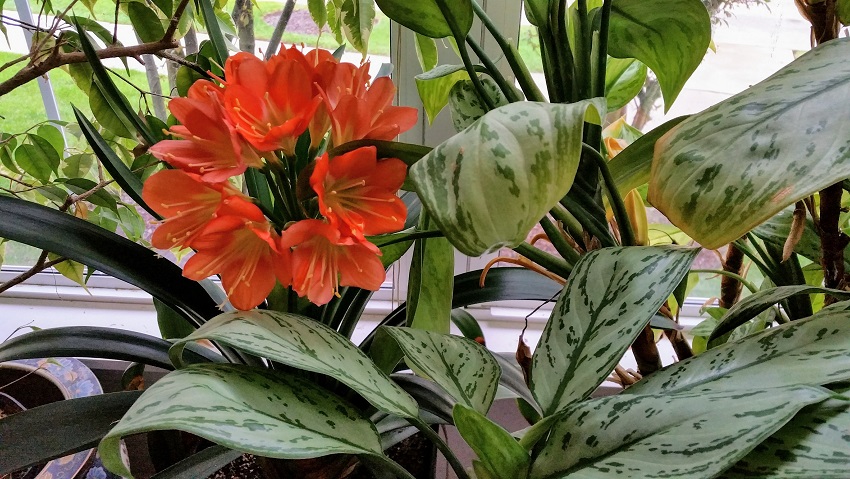
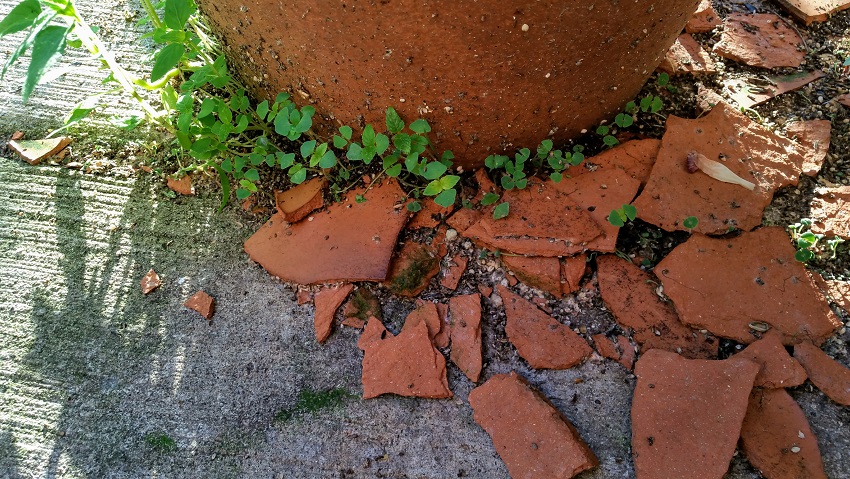
Photo: “Ever Growing” by the author linked to K’lee and Dale‘s Cosmic Photo Challenge on the topic of alien artifacts. I am hoping the pots will serve as alien artifacts where we are the invaders and plants are seeing if they can make use of our advanced technology.

Home Tour

Let us climb these well worn stairs,
Light above and peace throughout.
Heart tells mind, “Don’t worry here.
Love will show us all about.”


Linked to dVerse Open Link Night hosted by Björn.
Photo: “Going Up” by the author. Linked to jasenphoto’s Tuesday Photo Challenge where the prompt is “steps”.
I am also linking this to Jill Lyman’s July Challenge. Consider this an eight line poem of which I’ve written only the first four lines.

I’m exploring medieval lyrics.  I think the above might be called “trova romantica” with form and style related to the troubadours.  I’m trying to use the Portuguese Redondilha maior meter, a seven syllable line with the last syllable accented, but I might be missing something.


Announcement

The Spring issue (Vol 97, No 2) of The Lyric Magazine, “the oldest magazine in North America devoted to traditional poetry”, arrived in the mail.  It contains my poem, “Chutes and Ladders”.  I am grateful to the editor, Jean Mellichamp Milliken, for selecting it.

Service — #writephoto The Tunnel

Wounded King Herman was on his deathbed. His sons were killed fighting the warlord Zutom who was overthrowing the independent city-states. His wife died with the birth of Charlotte who was by his side. General Kim was also there. The plan was set and ready. King Herman asked his daughter if she would lead in his place and finish what they started–now. She said, “Yes.” Minutes later, and without ceremony, nineteen-year-old Charlotte became Queen of a debilitated city-state under siege by Zutom whose walls would fall within the month.

Word quietly spread of the King’s death because Zutom’s men were listening for sound and reported the increasing smell of decaying flesh. Inside General Kim gathered the inhabitants around the ruins of the chapel each knowing their accepted tasks. Queen Charlotte stepped up to the platform and placed her hand on the remains of the altar and whispered: “This ends today!” She approached General Kim who bowed, “It is our honor to serve you, our Queen. We will not fail you.” Queen Charlotte whispered in reply, “And I will not fail any of you.”

Queen Charlotte took her lead in the tunnels, the ancient, forgotten tunnels, unknown to Zutom’s spies, built a century ago for defense and escape and recently reopened. General Kim arranged the surrender of the city-state to Zutom. Twenty among the many volunteers of men, women and youth were previously selected by King Herman to accompany General Kim unarmed onto the field of surrender. Zutom didn’t think so many were still alive. To celebrate his victory he would show the world his power in case anyone were foolish enough in the future to rebel against him. On Zutom’s command, General Kim was bound while the others were executed.

“Take me to your King’s stinking body and then you will be permitted to join him.” General Kim led Zutom and his close defenders through the open gate of the city to the chamber where King Herman’s body lay. As Zutom prepared to decapitate the body, General Kim thought, “It worked!” They got Zutom inside the city on their terms. He had one final task. He pushed his foot on the floor panel setting off the explosion destroying the chamber. This triggered the gate of the city to shut. Archers emerged from hidden recesses. When they removed the threat of Zutom’s men trapped inside, they brought Zutom’s body above the city wall directly over the gate hanging it in the presence of Zutom’s forces. As Zutom’s body swayed, hundreds of archers in unison rose with their attention held on the field. They waited.

General Kim, with those inside the city, did not fail their Queen.

At the sight of Zutom’s body hanging above the center of the gate, his conscripted forces fled. Queen Charlotte signalled for the firing of the explosions in the tunnels concentrated under Zutom’s core forces, the only ones they did not want to escape and regroup. Fires blocked their retreat. Guerrilla attacks and confusion pushed them onto the field within range of the archers.

Years after the coming Unification, and then the Federation, and through the Renaissance and up to the present time, children grew healthy, strong, proudly recalling to their children how Queen Charlotte did not fail them either.


Linked to Sue Vincent’s Thursday photo prompt — The Tunnel — #writephoto
Photo provided by Sue Vincent for this prompt.
This is a work of fiction. Any resemblance to actual events or people is unintended.

Sue Vincent's #writephoto icon

The Blessing

Any blessing we receive
May it pass on from us to you.
Every blessing should conceive
A future blessing if it’s true.
So with passing may we leave
You hope to manifest what’s new.
Forgive what we did not get right.
Arise. Be blessed with holy light.


Linked to dVerse Poetics where Paul Scribbles is hosting with the prompt “blessings”.

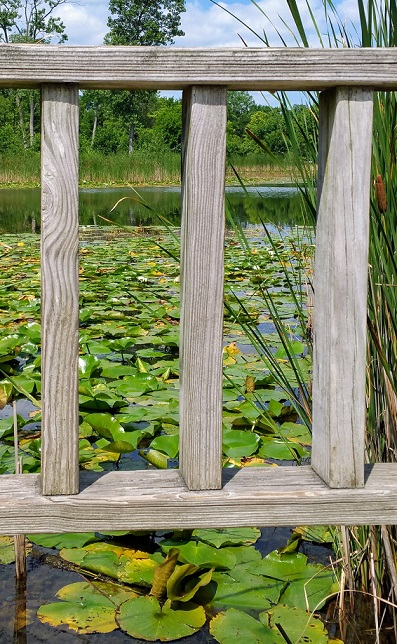
Midsummer Daydream

I walk toward Sunset Ridge Woods busy dreaming while this summer day is busy being beautiful.  Last night I read a fable telling about fairies guarding a forest glen.¹  They punished cutting trees in their creative ways using the imaginations of the trespasser. They were more effective than fines–and swifter. Natural retribution could take years or generations. Those fairies kept the riff-raff in line–if you believed in them.

Today governments take over guarding forest preserves. Perhaps they do permit what some might call over-harvesting where it’s out-of-sight and wild. Like beauty, one guy’s rightful use is another guy’s misuse. Governments keep the opportunists in line–if you believe they can.  I wonder how my mind would survive a trespass on a fairy glen? Maybe they still rule in these subtle ways even without my acknowledgment of their existence. If so, who could stop them?

SOUNDS OF SHRILL TRAFFIC
SUMMER WARMS THIS SUNSET TRAIL
SHELTERED BY STILL TREES

¹“The Man Who Had No Story” in Jane Yolen’s Favorite Folktales From Around the World.


Linked to dVerse Haibun Monday hosted by Grace with prompt “Summer”.
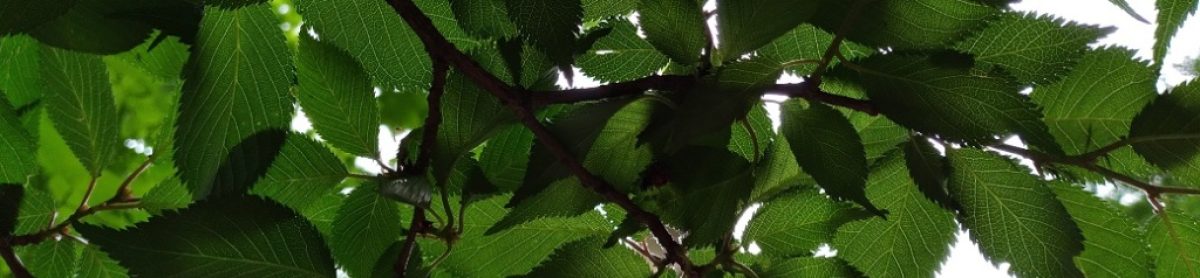
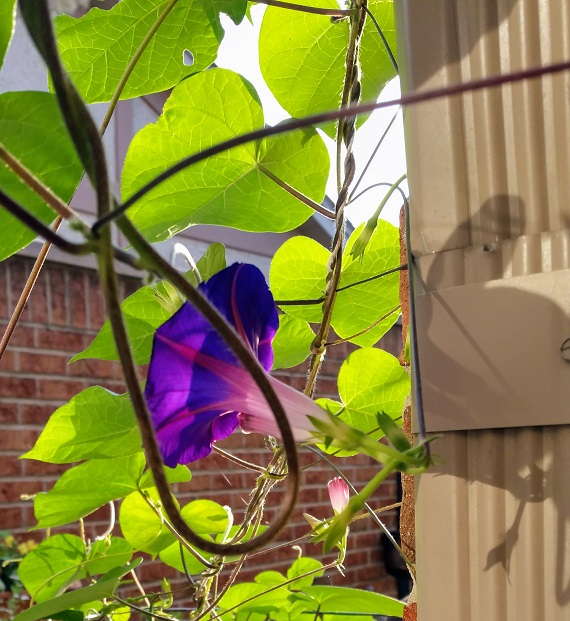
Photo: “Green Midsummer Madness” by the author linked to K’lee and Dale‘s Cosmic Photo Challenge with prompt “midsummer madness”.

Menu Filtered Reality

The menu doesn’t nourish like a meal,
But helps the heart decide on what to do.
Consider how true knowledge twists what’s real.

Words conceal whenever they reveal.
There’s always something more to struggle through.
The menu doesn’t nourish like a meal.

What’s fully true is more than we can feel
Though what we feel reveals that pure truth, too.
Our knowing turns and teases what is real.

Food may be a medicine that heals
Or poison that consumes us as we chew.
The menu doesn’t nourish like a meal.

The heart insists the brain submits and kneels
So it can help them both explore what’s new,
Obtain sure knowledge teasing what is real.

Impulsive day is eager for a deal.
May dreamy night’s correction shelter you.
The menu doesn’t nourish like a meal
Nor does true knowing circumscribe what’s real.


Linked to dVerse Meeting the Bar. I am hosting today and the form is a villanelle. You are welcome to link a villanelle you have written for this prompt.  The modification I made to the villanelle form is to not exactly repeat the second line of the couplet theme.
Photo: “Sweet Corn” by the author

Home

Perspectives are of details
That limit what we see
So what we see will benefit
Our subjectivity.

If I were walking from here
Upon adventures tossed
I’d mark this “home”,
Then go and roam
And try not to get lost.


Linked to dVerse Poetics hosted by Mish from mishunderstood.wordpress.com with the prompt being to choose a sign and write about that as a prompt. I selected a set of familiar street corner signs near where I live that included a walking guy caution sign.
Photo: “Home” by the author.

Beyond

Salt and pepper turn to gray.
Water, wash me all away,
All but love that shines her light
For a journey through the night.

Suffering looks like defeat
Til submission is complete.
Salt and pepper, take this friend.
Guide gray fears beyond the end.


Linked to dVerse Quadrille hosted by Kim from writinginnorthnorfolk.com using the word “pepper”.
Photo: “Power of Love” by the author. This is graffiti I found under a train overpass in Chipilly Woods last weekend. I am linking it to K’lee and Dale’s Cosmic Photo Challenge.  K’lee’s prompt is “Faster than the Speed of Light”.  I hope they will accept it.

Butterfly Feeling

In Spring the heart-throb butterfly
Makes lovers stop to touch and sigh
While others watch them passing by
Excited without asking why.

Though it may be a silly thing
When butterflies are fluttering
It’s better than what Winters bring
When frozen hope lacks warmth to sing.


Linked to dVerse Open Link Night hosted by Grace.
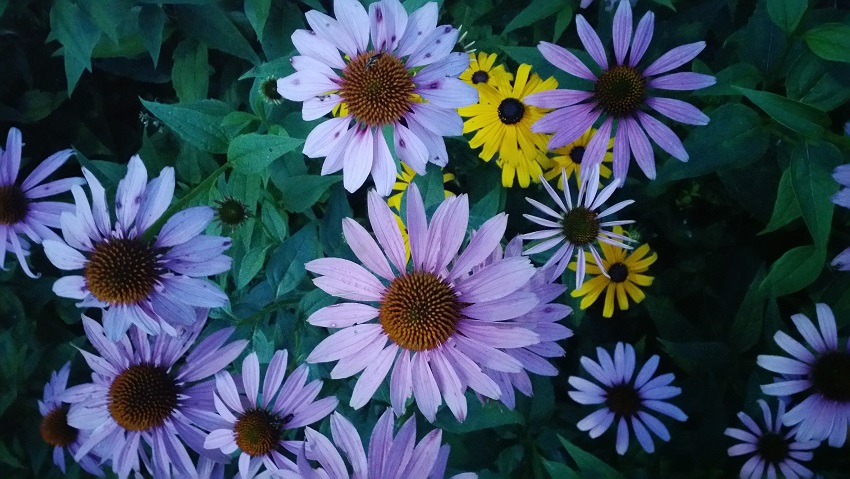
Photo: “Flowers in a Pot” by the author

Shanti, the Dragon — #writephoto Twilight

The dragon watched the evening twilight darken the valley into deeper blues. He was well-known, but the only one who ever saw him was a monk who thought his cave would make an ideal retreat from the banalities of civilization–until he saw the dragon. Cautiously, the monk backed away mumbling, “Shanti, shanti, shanti.” The dragon thought that was his name and for the purposes of describing his encounter with the damsel that is what I will call him.

The villagers in the valley knew all about Shanti’s treasure. It was worth more than any wealth on earth because it also contained, besides the piles of gold, the Master Gem. This gem gave anyone who saw it twinkle in the cave’s dim light eternal youth–and all that dragon did was sit on it.

However, to get one’s hands on these treasures, one needed, according to legend, a pure damsel whom the hideous beast had to capture. One also needed a brave knight who, under cover of darkness, would lure the fiendish dragon out of his cave and save the damsel. These two, damsel and knight, would be legally entitled to take as much of the hoard as they could carry away before the cave closed forever.

The part about the damsel raised concerns. Youthful females, whose purity was not in doubt, did not want to have such a dangerous part to play in getting the gold. Furthermore many a brave knight wondered, “Why not kill the stupid dragon and keep the gold for myself?” Every now and then some fool would remind everyone else that no one had ever seen this dragon. No one had ever seen his gold, nor this magical “Master Gem”, except for a mythical monk who probably made up this tall tale of how to get the treasure. Most of the townsfolk felt such people could be ignored.

Given these stories, you would think many brave knights and pure damsels would have visited Shanti, but until this evening he had not seen any. That’s why he found it odd when she poked her head into the dimness of the cave and asked, “Hey! Are you the dragon?”

“I’m a dragon,” said Shanti.

“Do you mind if I stay?”

“There’s room for both of us.”

The damsel waited for Shanti to do something distressful to her, but when nothing happened, she asked. “Are you a real dragon or not? Can you even breathe fire?”

“You mean like this?” Shanti took a deep breath and exhaled a flame that lit up the cave. As he did so the damsel screamed and Shanti jumped.

“Help! Help! I’m being held by a fire-breathing dragon!”

At the entrance of the cave, Shanti saw seven knights with drawn swords. “Prepare to die, dragon!” said one, who, unlike the others, couldn’t see very well what was in the shadows. When Shanti stood up, he was over ten times their height and his scales looked harder than their swords.

The smartest of the knights countered, “We mean you no harm, dragon. Move outside the cave so we may tend to the damsel and we will depart in peace.” Shanti felt this was reasonable. Maybe they could convince the damsel to leave? He moved to the cave’s opening.

“Watch where you sling that thing!” The damsel scolded seeing Shanti’s tail slide a bit too close to her.

Shanti saw them pick through his treasure. One knight found a rusted bar of iron and discarded it, but the others found nothing more exciting than broken pottery. The hoard looked like garbage left by long forgotten peasants. The damsel noticed something sparkle, but raised it to her eyes in disappointment. She tossed it. As they left she observed, “Your treasure is a pile of junk. Loser.”

Shanti went into the cave and sat upon what he now knew was junk. He looked around for Sparkie, that stone the damsel discarded, and found him on the ground. Shanti held him to his face and smiled. The thought never occurred to him that someone might want to take Sparkie away. Why would anyone want to do that?

Sparkie scattered the increasingly faint twilight through the cave with soft playfulness. Those watching this scene, if any damsel, knight or dragon-fearing peasant ever had the opportunity of doing so, would have seen the twinkle in the dragon’s eye.


Linked to Sue Vincent’s Twilight #writephoto.
Photo provided by Sue Vincent for this prompt.

Sue Vincent's #writephoto icon