All of these limericks were originally posted to either Esther Chilton’s Laughing Along With A Limerick or her Writing Prompts or derived from those posts during the month of February 2026.
Crazy Or Calm
“Are you crazy?” Not yet. I’m just calm like a rash that is itching for balm like a thought I won’t think like a word with a wink like a heart beating true in your palm.
“I am flying. I’m trying. OK?” said the bird to his mama one day. Then she jumped in the nest. Pushed the chick out. The rest is now history. He’s flying. OK?
There are birds, many birds, in the air. They fly calmly. They all are aware
Poisoned Apple
There once was a queen who thought she was the loveliest queen that could be till Snow White came along. Though that apple was wrong, the queen’s gone, right or wrong, thankfully.
I could drive, but I’d much rather walk. I could fly, if I could, like a hawk. Since I know that a lie makes a mess, I will try not to lie, but beware when I talk.
The dim light wasn’t bright as was right. Were it bright I would dim it at night, but it’s day, as we say when dark night goes away, when the sun that’s not dim is quite bright.
Those odd memories refuse to stop like a judge seeking justice on top of your case every day. All your lawyer need say, He’s now righteous. So, let the case drop.
All my worries are worrying fast. They have cast into now what was past, but today is today and the past’s gone away so this worrisome present can’t last.
So I told him it’s better to write a love poem than whine through the night. But his taste wasn’t for all that mushy stuff or he got wrong what he wouldn’t get right.
All of these limericks were originally posted to either Esther Chilton’s Laughing Along With A Limerick or her Writing Prompts during the month of January 2026.
Curly Curls
Well, I don’t think I have much to say about curls that girls display. When each curl is true, then the girl is, too – so I thought – and still do – come what may.
When the trees are all white, there is snow. It is bright in the light. I will go out to play in the stuff till enough is enough, go inside where I’ll hide from the snow.
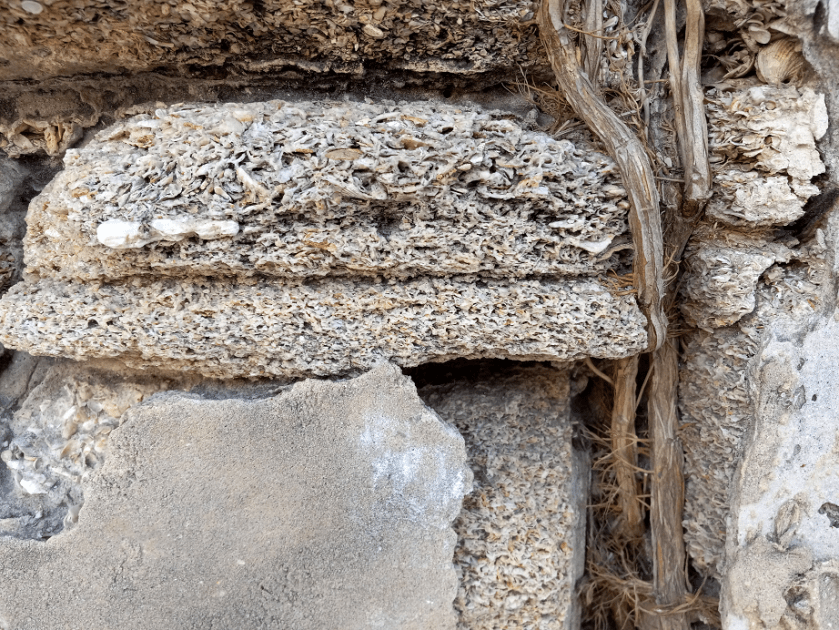
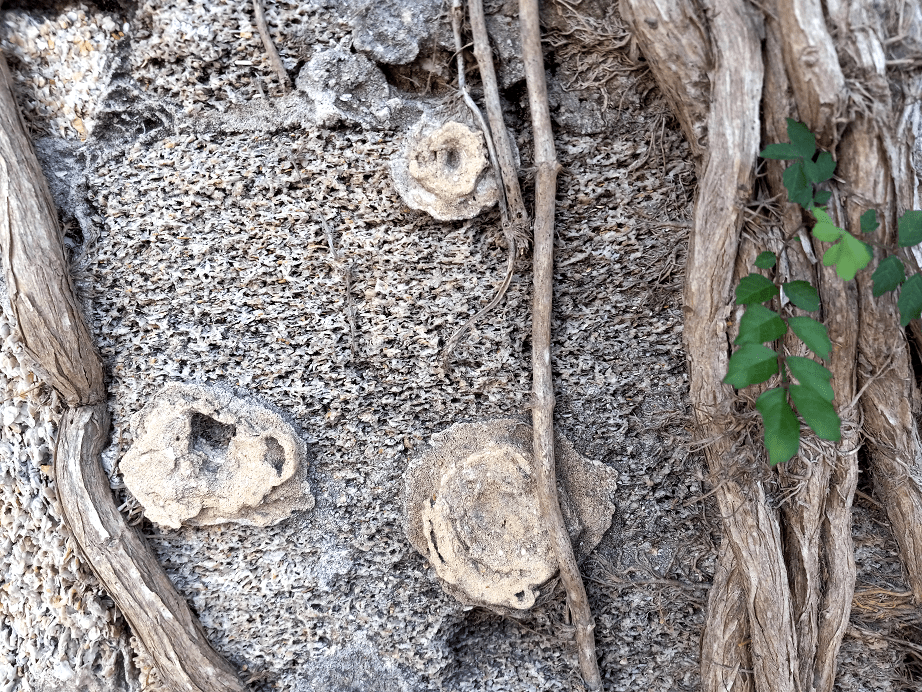
It’s a wall so I heard after all with strange stuff making up this fine wall.
Farm
There’s a farm in the valley that’s fine. You can buy there fresh veggies and wine. There are eggs there as well. Though some critters may smell, when there’s sun, then the sun loves to shine.
Whether red, maybe blue, lovely green, it is light. It is bright and serene, but I wonder if you know that light can be true? Well, I do and it’s true. I have seen.
Though some thought that it should be a crime and it was, more or less, for the time when dark poems with words like loud ravenous birds made no sense and much worse didn’t rhyme.
I have heard it’s absurd. It’s a crime to be running one’s mouth all the time. Still, mine’s running so well even whiners can tell it’s all nonsense but nonsense with rhyme.
And I’m glad that I spotted this wall.
Light and Night Rhymes with Fright
Though the light said it’s day, it was night. I could see. What a horrible sight! There were monsters out there. There were goons everywhere, but in peace I slept on through their fright.
“All the same you are just playing games.” Well, at least I am not calling names. At least now I am not. When the feuding gets hot, who knows what we will use for our flames?
All of these limericks were originally posted to either Esther Chilton’s Laughing Along With A Limerick or her Writing Prompts during the month of December 2025.
Boring
Though it’s boring I’m snoring away all those daydreams that come during day and those nightmares as well got me snoring. I’d tell you a story – “It’s boring,” you say.
There once was a wonderful sky and a guy with two eyes asking why
Sweet Candy
Though I used to think candy was sweet, well, it is and it was. I could eat my fair share of the stuff even more than enough even more than my share. It’s so sweet.
It’s away in a sleigh we will go though it’s warm and there isn’t much snow. In fact, it’s quite hot and the reindeer are not really reindeer. Oh, well. Here we go!
that fine sky was so red. Ah, there’s blue now instead.
Giving
I am living, that’s why I will be someone giving back life given me. There are more ways than one to give life. See? The sun keeps on giving and giving for free.
With the holly and ivy we go. Grab a kiss under sweet mistletoe. But is mistletoe sweet? Well, the rhyme was no cheat. May that kiss bring you bliss and love grow.
During Christmas our family is fine. There are some who perpetually whine. There are some full of joy. How they giggle, annoy all the whiners, but family is fine.
The cell of my prison’s fine door was opened. I stood on the floor. Do I dare to go out? Dare I run, walk about? I stayed stuck so they locked the cell door.
Matthew 25:1-13 KJV – 1 Then shall the kingdom of heaven be likened unto ten virgins, which took their lamps, and went forth to meet the bridegroom. 2 And five of them were wise, and five were foolish. 3 They that were foolish took their lamps, and took no oil with them: 4 But the wise took oil in their vessels with their lamps. 5 While the bridegroom tarried, they all slumbered and slept. 6 And at midnight there was a cry made, Behold, the bridegroom cometh; go ye out to meet him. 7 Then all those virgins arose, and trimmed their lamps. 8 And the foolish said unto the wise, Give us of your oil; for our lamps are gone out. 9 But the wise answered, saying, Not so; lest there be not enough for us and you: but go ye rather to them that sell, and buy for yourselves. 10 And while they went to buy, the bridegroom came; and they that were ready went in with him to the marriage: and the door was shut. 11 Afterward came also the other virgins, saying, Lord, Lord, open to us. 12 But he answered and said, Verily I say unto you, I know you not. 13 Watch therefore, for ye know neither the day nor the hour wherein the Son of man cometh.
You need two things to write a poem. You need inspiration and you need to know a few techniques. I’ll cover one of the techniques called meter, but ultimately inspiration is what counts.
Inspiration
Before you can even begin to write a poem, you need something to say. Once you have that then you need words.
Occasionally you will hear poets talk about their muse who tells them what to say and how to say it. To avoid the distraction of Greek mythology, I will stop referring to a muse, which none of the poets who use that word in a modern context believe in anyway, and talk generally about a poet’s source of inspiration. However, the good thing about those poets who acknowledge a source of inspiration is that they know they themselves are not that source no matter how responsible they are for the final product.
Poets who do not believe in a source of inspiration give themselves full credit for what and how they say things. For them, poetry is self-expression. I would like to assert, so there is no ambiguity about my own views, that self-expression is tedious and overrated.
In addition as a poet you are always serving your source of inspiration. You are always serving that spirit who is inspiring you, helping you and comforting you even if you mistakenly believe that you yourself are that spirit.
That spiritual source of inspiration may be a good spirit. It might also be not so good. If you write about topics that glorify, incite or condone anger, lust or some habitually dysfunctional thinking in your readers, then your source of inspiration is not so good. The poem may sound nice and people may write mushy music to sentimentalize it, but that source of inspiration will remain, in spite of all that sugar-coating, not so good.
Once you understand that you are not expressing yourself when you write a poem but you are serving a spiritual source of inspiration and that source may be good or not so good you will begin to see what is morally at stake when you offer a poem to a reader. I hope you won’t mind me drawing the conclusion that any not so good source is a demonic source. It is out to get you so it can use you to get others.
I see the good source of inspiration as the Holy Spirit, a Person of the Trinity with Whom the poet can enter into a relationship. I identify the demonic sources with spirits of antichrist. They are deceivers who manipulate those foolish enough to play with them.
Bottom line: Writing a poem is not a neutral artistic expression of oneself, but a moral act of service to some spiritual source of inspiration. Make sure that spirit is the Holy Spirit.
1 John 4:3 And every spirit that confesseth not that Jesus Christ is come in the flesh is not of God: and this is that spirit of antichrist, whereof ye have heard that it should come; and even now already is it in the world.
Technique
Once you have a topic, you will need to express it. Although the words may come to you from the Holy Spirit, you need to make it melodious. In English that means paying attention to meter.
Meter is the pattern of accented and unaccented syllables in the words you use. The most memorable, and influential, poetry repeats metrical patterns. Some of these patterns are given names such as limericks or common meter, sonnets or blank verse. Others are specific to the poem itself.
As an example, listen to the song, What a Beautiful Name, and try to note which words are accented and which are not in the lyrics. In particular there are four stanzas in this song with an almost identical metrical pattern except for an unaccented syllable on some lines. I’ve listed two of those stanzas below. The ACCENTED syllables I put in italicized bold red capital letters. The unaccented syllables I wrote normally.
YOU have noRI-val. YOU have no E-qual. NOW and for-E-ver,GOD, you REIGN.
YOURS is the KING-dom. YOURS is the GLO-ry. YOURS is the NAME a-BOVE all NAMES.
Were you able to find the other two stanzas?
If so, you know what meter is. You know why those lyrics are powerful even without the music. Make your poems memorable by using metrical patterns.
If not, great! You now have an opportunity to start building your relationship with the Holy Spirit by asking Him to show you what you don’t understand. If you don’t think He’ll talk to you, ask Him anyway, sleep on it and wake up refreshed. Then thank Him regardless what you hear. Giving thanks means you acknowledge that you are in a personal relationship with Him.
Conclusion
There are many tricks that will help any poem be more powerful no matter what the source of inspiration. They are just techniques. One could even program a computer, which is neither intelligent nor inspired, to follow the meter and other aspects of the sound of a poem.
Ultimately what matters is the source of inspiration. To write a poem you need to first choose whom you will serve.
And that’s all there is to it.
Joshua 24:14-15 14 Now therefore fear the Lord, and serve him in sincerity and in truth: and put away the gods which your fathers served on the other side of the flood, and in Egypt; and serve ye the Lord. 15 And if it seem evil unto you to serve the Lord, choose you this day whom ye will serve; whether the gods which your fathers served that were on the other side of the flood, or the gods of the Amorites, in whose land ye dwell: but as for me and my house, we will serve the Lord.
My monsters have me cornered.
There’s nothing I can do,
But they’re so jumbly juicy
My teeth would gnaw them, too.
I’d like one buttered up to bite
While thinking thoughts real deep
So people think the stuff I write
Need not put them to sleep.
Oh, sure, I do get sleepy,
But they are getting near.
Monsters, monsters everywhere!
I’m cornered. They are here.
Linked to dVerse Open Link Night hosted by Grace.
For a future collection of nonsense called “Monsters, Monsters Everywhere and Not a Bite to Eat”.
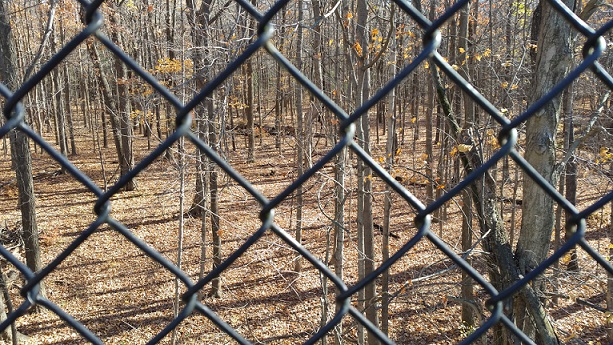
Photo: “Fenced In or Out” by the author.
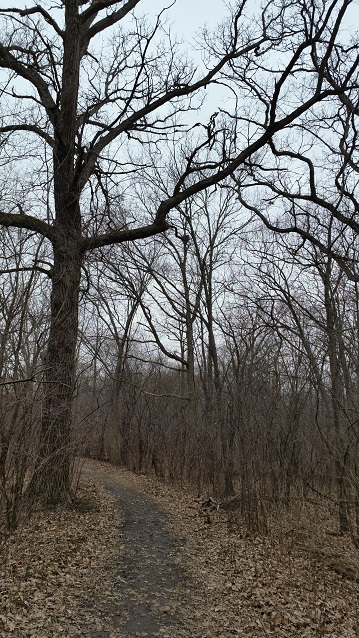
We bathe in wonders. Some manipulate aspects of these aided by theories of gravity or electromagnetism. I try to stand tall with shoulders back so I can breathe deeply which keeps my heart open to resonate with Whatever. I step off the street and enter a dense forest trail. As I move deeper into the woods human sounds smooth out into hums softer than the crunch of my feet on last autumn’s leaves.
Walking this path, I intend to pay attention, but I miss almost everything.
When I choose not to enter some woods, it sprinkles me with thoughts of regret. If I do enter, but pay no attention to anything, I am still caressed. Someday I might understand the rapture of every creature like that of the worms as they return autumn’s mulch to the trees, but, right now, I can’t separate out those drops of this forest bath. I walk. When the path ends I feel refreshed.
WORMS WORK WINTER MULCH
RIVER DRAINS AWAY THE SNOW
FOOTSTEPS CRUMPLE LEAVES
Linked to dVerse Haibun Monday hosted by Toni aka kanzen sakura (www.kanzensakura.wordpress.com) who writes, “In 1980, the Japanese began a type of healing/meditation/relaxation process called shinrin-yoku (森林浴) or literally, forest bathing.” The prompt is to try this yourself and report on your experiences.






 Poetry, Short Prose and Walking